Biodiversity starts with the grass
Biodiversity starts with the grass
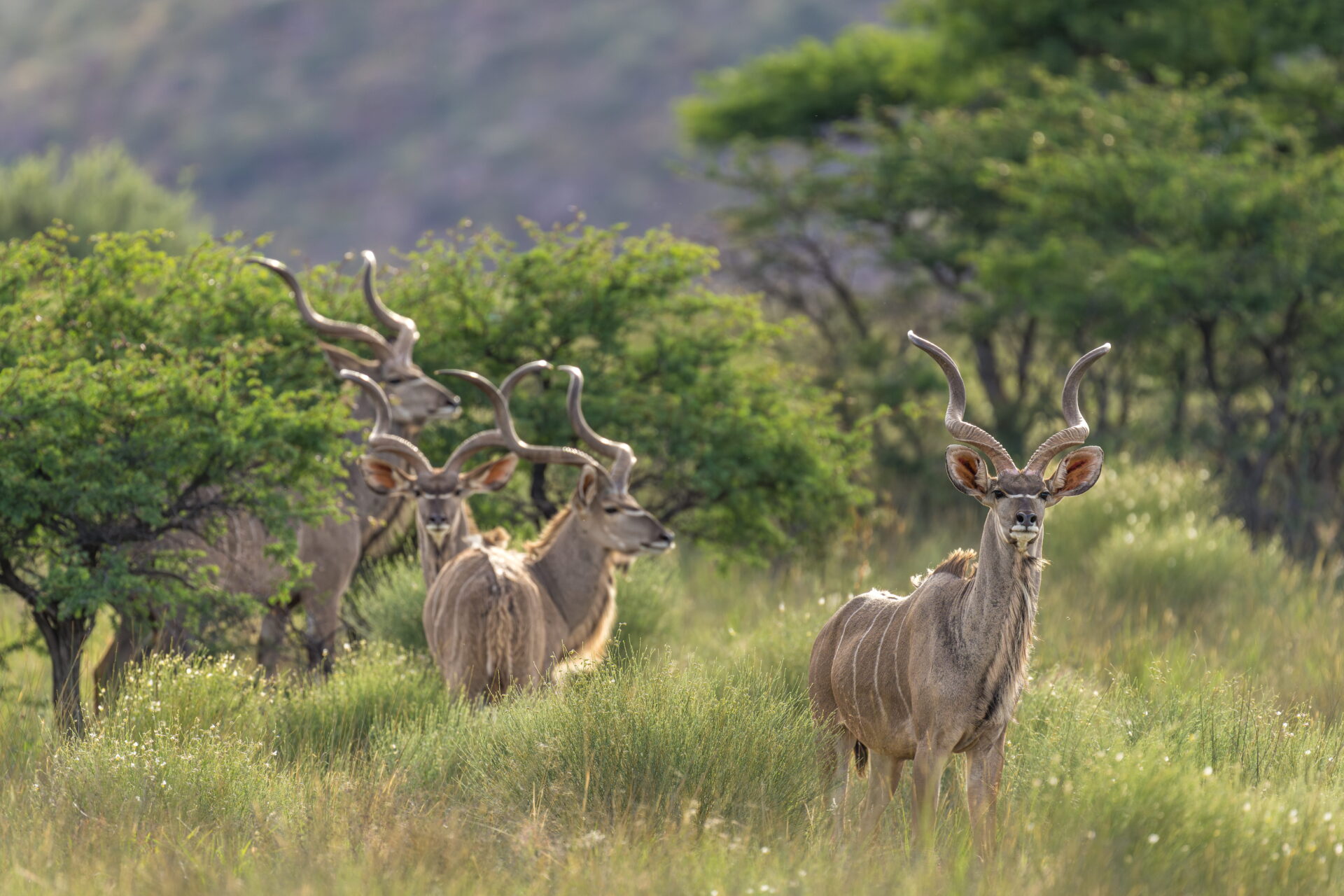
It is easy, at Tswalu, to focus on predator and prey. But a gathering of researchers on the reserve this month was there to talk about grasses, ground cover and bush encroachment. It was a timely reminder that vegetation and soil are the base of the food web, and that everything else stems from there.
This May, Tswalu hosted its first vegetation research workshop, bringing together many of the conservationists, ecologists, botanists and monitoring specialists who have been working across the reserve for over 10 years. The occasion recognised that Tswalu now holds enough long-term data, across enough disciplines, to move beyond parallel study toward genuine integration. The workshop covered long-term vegetation monitoring, vegetation biomass, bush encroachment and its management, and fire ecology. It also addressed the expanding role of satellite and drone technology in scaling site-specific monitoring across Tswalu’s 118,000 hectares – tools that promise higher-resolution data at lower cost, and the ability to apply what is learned in one area to the reserve as a whole. It is a mark of how seriously, and how consistently, this work has been pursued.
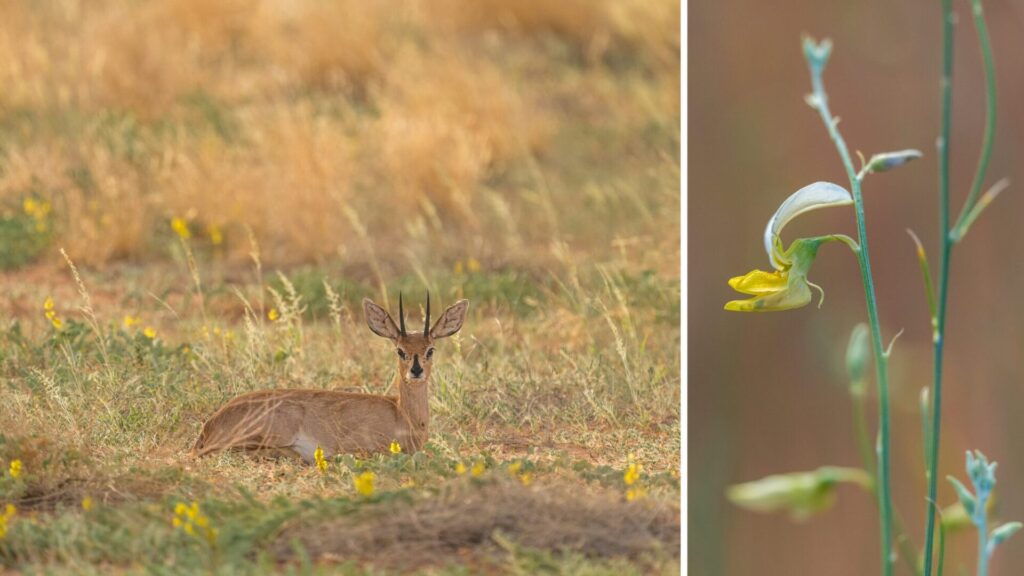
The timing could not have been better. By early May, Tswalu’s annual rainfall had already topped 600mm, and the vegetation response across the reserve has been unlike anything recorded in recent years. Herbivore stocking rates depend on vegetation biomass; predator stocking rates depend on herbivore numbers; soil health underpins all of it. As Dr Wendy Panaino puts it, the vegetation monitoring conducted over the last few years is critical for management decision-making – whether the question is how much the land can carry, where and how to manage encroaching bush, or when and where to burn.
In the Gordonia Shrubveld and across the mountain sites, good grazing grasses – silky bushman grass (Stipagrostis uniplumis), gha grass (Centropodia glauca) and finger grass (Digitaria eriantha) – are abundant, with ground cover approaching 80% in areas of lower herbivore pressure. Climbers and creepers are competing for every patch of open soil. Pioneer species are moving into previously bare ground, beginning the slow work of stabilisation. Across the Korannaberg mountain sites, species not recorded for several years have reappeared this season, among them bobbejaanuintjie (Babiana hypogaea) and partridge pypie or patrysuintjie (Gladiolus permeabilis). The pink blood lily (Haemanthus humilis), sparsely occurring in ordinary years, was abundant in patches across the rocky slopes, alongside ferns and mosses colonising the shaded outcrops in an unusually vivid flush of green.
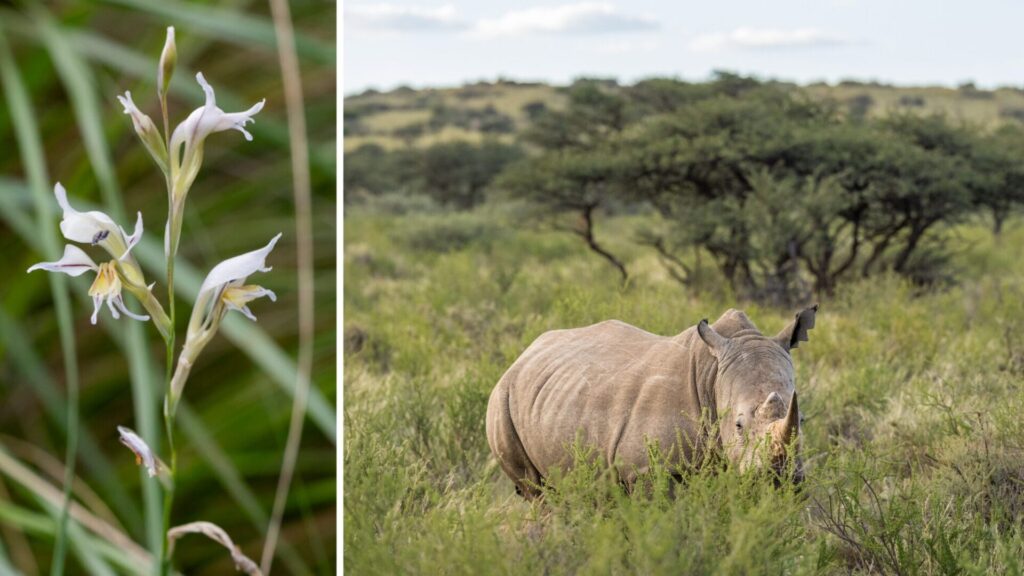
A well-vegetated landscape does not just look different but functions differently too. More biomass means the land can support more animals, in better condition, which in turn supports healthier predator populations. What guests experience on the reserve – the density of wildlife, and the quality of sightings — is, in no small part, a product of the grass, herbs and shrubs.
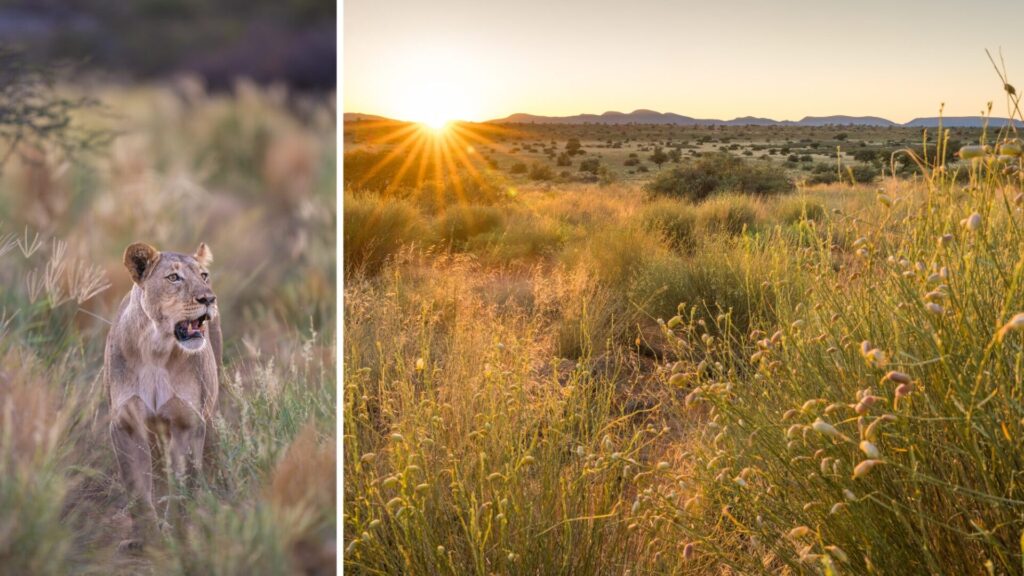
The outlook points to hotter, drier conditions compared to this year, in keeping with a predicted El Niño pattern. What has germinated will be tested, including whether the exceptional black thorn seeding this season becomes an encroachment issue in certain areas, something researchers are now positioned to track with precision. What the vegetation monitoring ensures – and what this month’s workshop reinforced – is that Tswalu will be watching closely, with the accumulated data to understand not just what is changing, but why.
DOWNLOAD THE CONSERVATION JOURNAL HERE
Images: Marcus Westberg and Tania Anderson


