What a National Geographic photographer notices after six seasons at Tswalu
Marcus Westberg is a conservation photojournalist, a Senior Fellow of the International League of Conservation Photographers, a Sony collaborator, and a National Geographic photographer. He made headlines recently for documenting the world’s largest terrestrial migration in South Sudan, which included the first drone footage of this natural phenomenon. His photography from South Sudan featured in the May 2026 issue of National Geographic, and was shortlisted for the Sony World Photography Awards 2026.
Marcus is also a regular at Tswalu, since first photographing the reserve in 2021. Jane Broughton asked him about his most recent visit, in June, and what keeps drawing him back to a place he already knows so well.
You’ve been returning regularly to Tswalu since 2021. What are the visual details, the light, the colour, the terrain, that would reveal that an image was taken here and nowhere else?
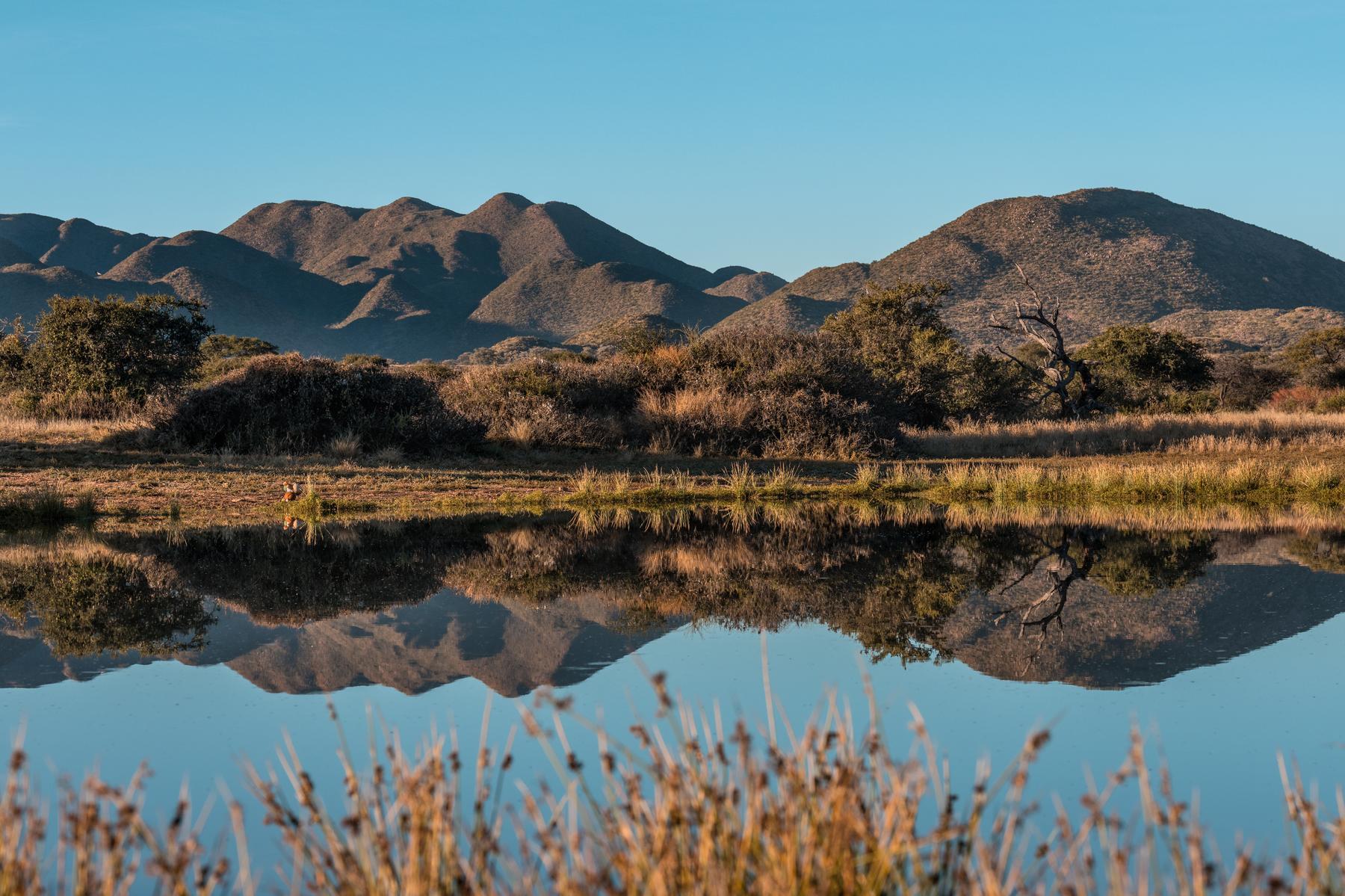
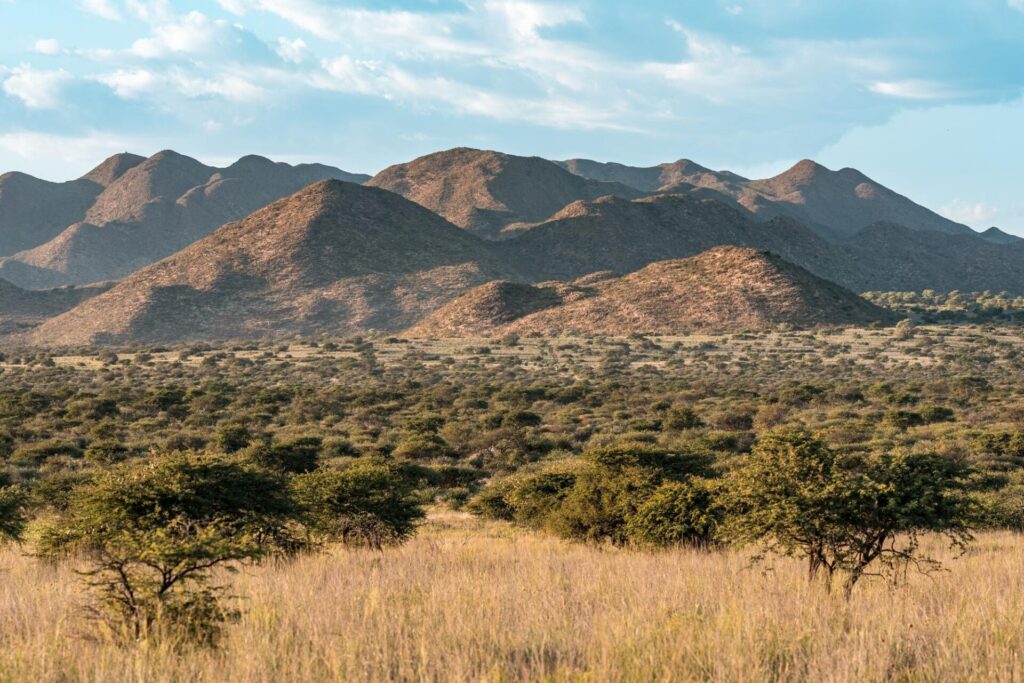
It’s easy enough when you zoom out – the landscapes, as varied as they are, are so unique. But even when you zoom in, there are clues in the light, the ground, and the colours – there’s almost always a touch of red somewhere. And the specific combination of sand and rich vegetation is different from what I’ve come across elsewhere.
What’s your favourite time of year to shoot Tswalu, and why?
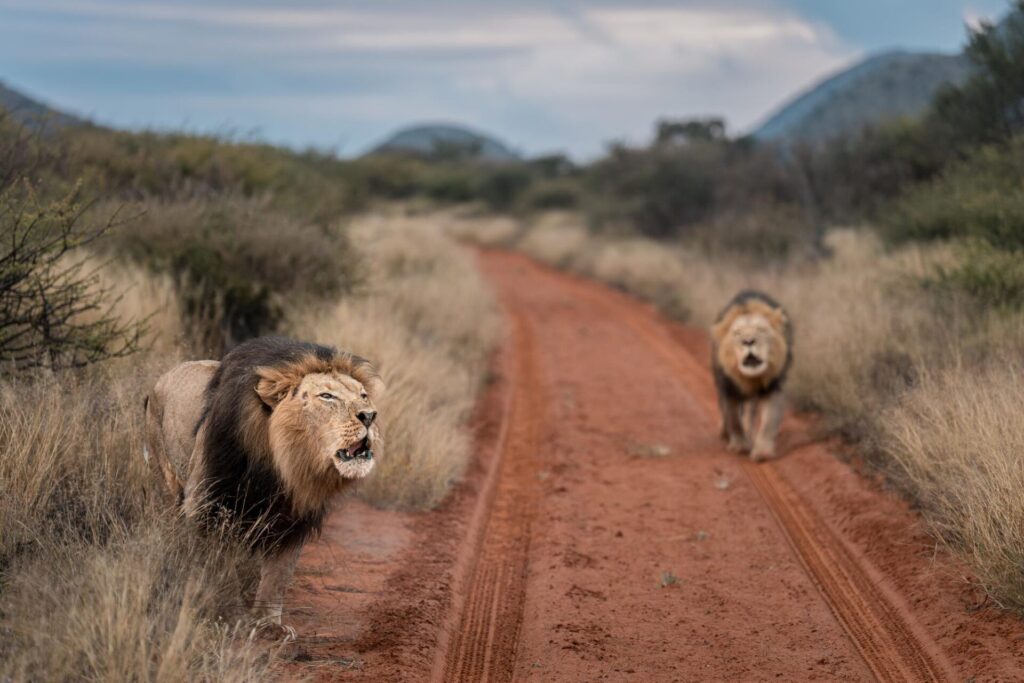
Every season has something to offer. I like really cold winter mornings, because the frost makes everything glitter, and you can see the breath of a male lion against the sunrise from quite a distance. But as the temperatures rise, wildlife wakes up earlier; if you want to see meerkats at first light, October is certainly better than July. And you might not need that thick down jacket anymore. And I love going anytime when there are wildflowers in bloom – it just adds so much to the landscape.
A colony of meerkats, lion, rhino, or cheetah – you could find these species elsewhere in southern Africa. What is it about how you’re able to work with them at Tswalu that you don’t get elsewhere?
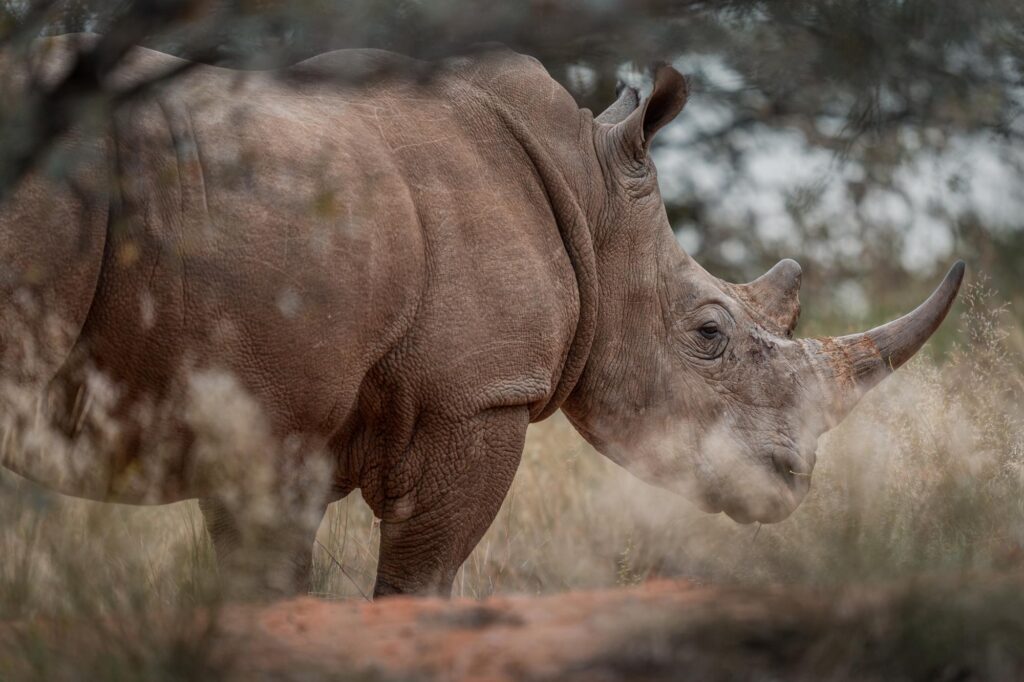
The space and time available are a huge benefit. I quite often like to work with my guide in areas where we’re the only vehicle, even if that means going for more obscure or elusive animals. But it’s obviously helpful to have meerkats and cheetahs that don’t run away at the sight of a human. I think Tswalu has struck a nice balance in their habituation process: you can get close, but you won’t see meerkats using people’s heads as lookouts.
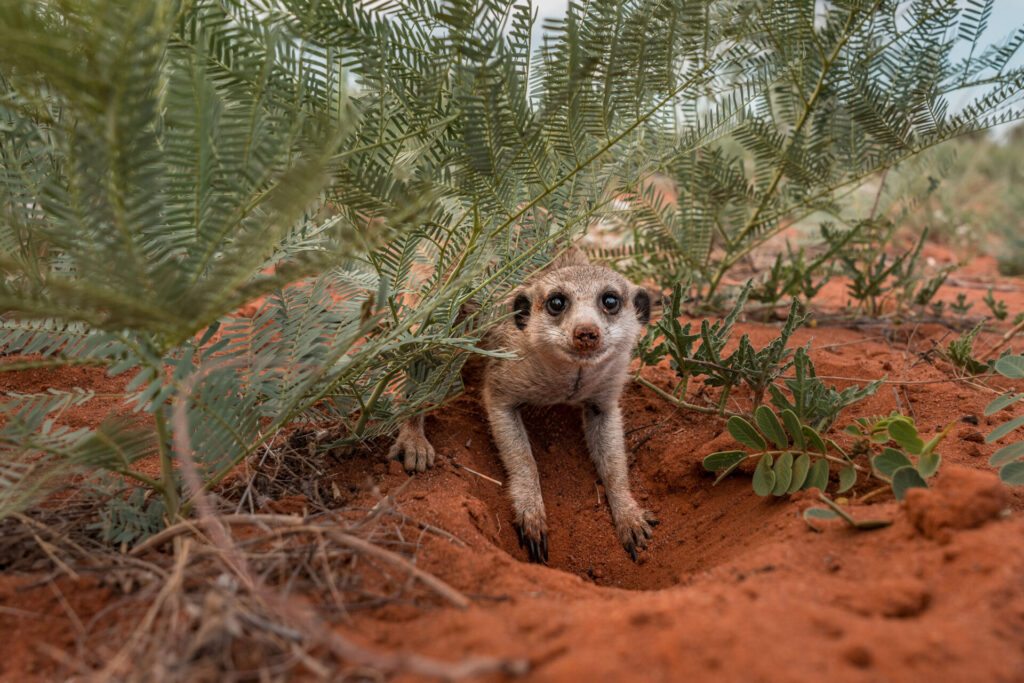
How does taking photos on foot change what you come home with, compared with a reserve with vehicle-only access?
First of all, I come home having gotten much more out of the experience than I would if I couldn’t leave the vehicle. I think that’s incredibly important. In terms of photography, it’s all about angles and perspectives. For bigger animals, sure, but I love watching and photographing smaller creatures as well, and that’s very difficult to do from inside a vehicle. If you want to isolate a meerkat, for example – by which I mean, take a portrait with a blurred background – you really need to have your lens parallel to the ground, not aiming down.
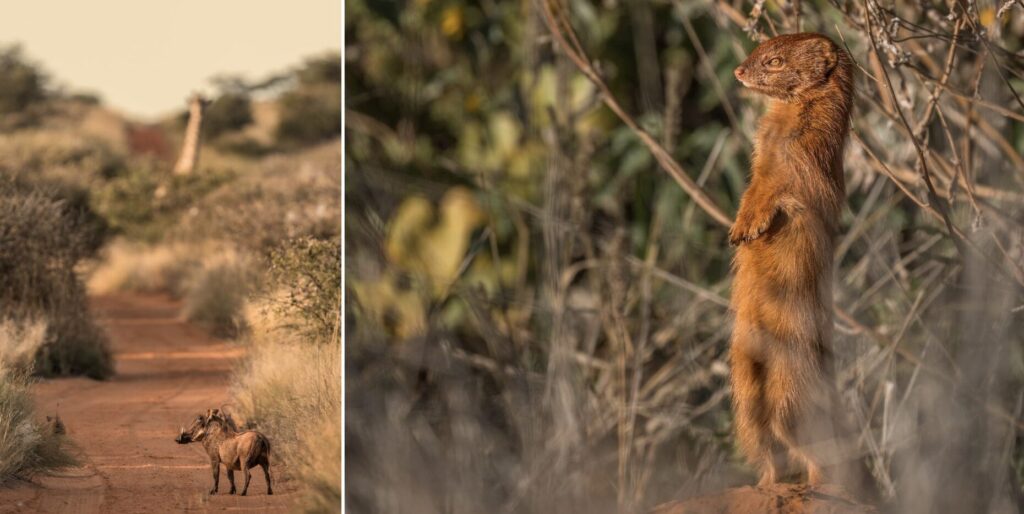
Tell me about one frame from this June, one animal, one moment, one piece of light, that you couldn’t have got anywhere else.
In some ways, the idea of always pursuing something original is overrated. It can easily lead to overthinking what you’re doing, and to turning away from potentially beautiful frames simply because they don’t feel new. I tend to find that if I just trust my instinct, much of what I walk away with is going to be slightly different anyway, because circumstances are never exactly the same. I rarely go out looking for something specific when I’m at Tswalu; instead, I just let myself be awed by whatever greets me, and try to work out what it is about a scene that I particularly like.
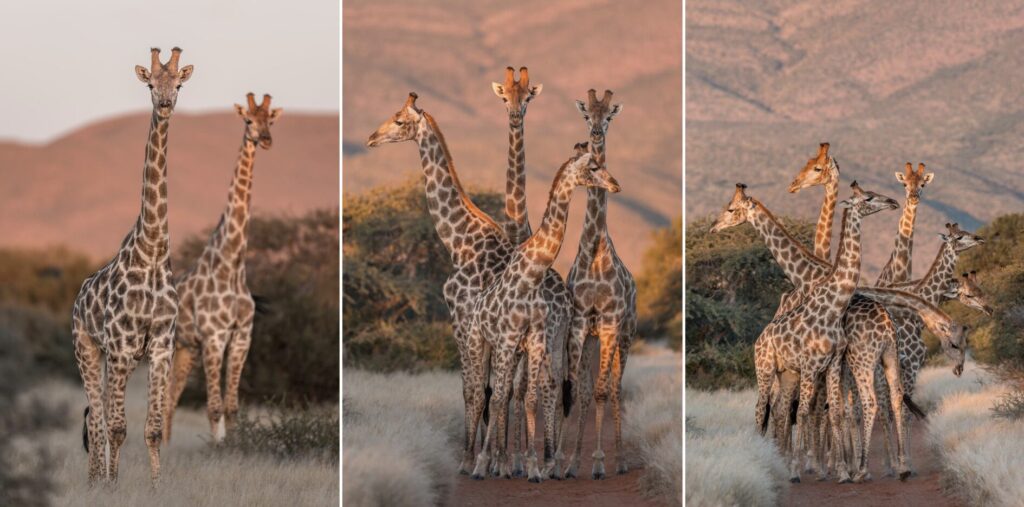
I had the most wonderful giraffe encounter in the dunes late one afternoon, just around sunset – though it was overcast, so the light was very soft. A group of them were just standing there on the road, and it honestly looked like they were cuddling. We stayed with them until it got too dark to photograph.
Over the course of a stay, what are the signature Tswalu shots a guest should be watching for, and is there a time of day or a part of the reserve where each one comes together?
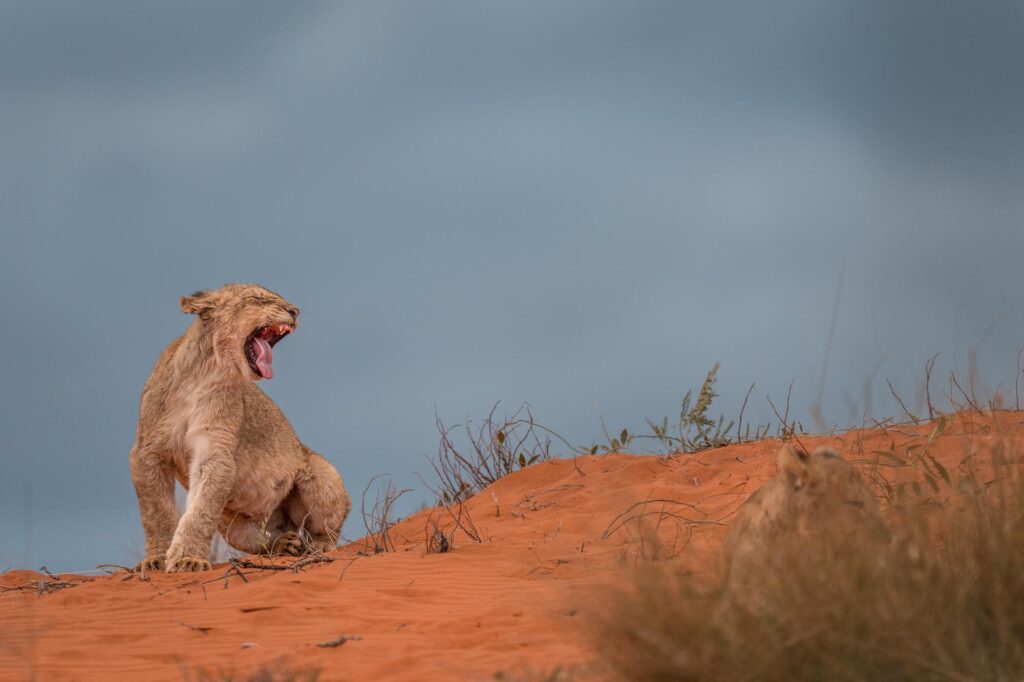
I have a few favourite places – I think the subjects matter less, in many ways. I love the natural water holes, especially the ones with a nice backdrop in Lekgaba. Also in Lekgaba, there are some lovely viewpoints that I like to go past, just in case a rhino or an eland is lurking somewhere. And I love the dunes near Motse. Anything walking along the top of a dune crest is about as Tswalu as it is possible to get.
What’s the mistake you most often see anyone new to photographing wildlife and landscapes make here?
Too many closeups. Or, rather, not zooming out enough. Portraits are lovely and fun, but you often lose sight of where you are. To me, seeing animals in their natural environment tells much more of a story, though mixing it up is obviously ideal. Furthermore, even the best photographers sometimes fail to pick up on small details, or end up with a not-quite-straight horizon; zooming out ever so slightly gives you the freedom to correct for that without losing any important details.
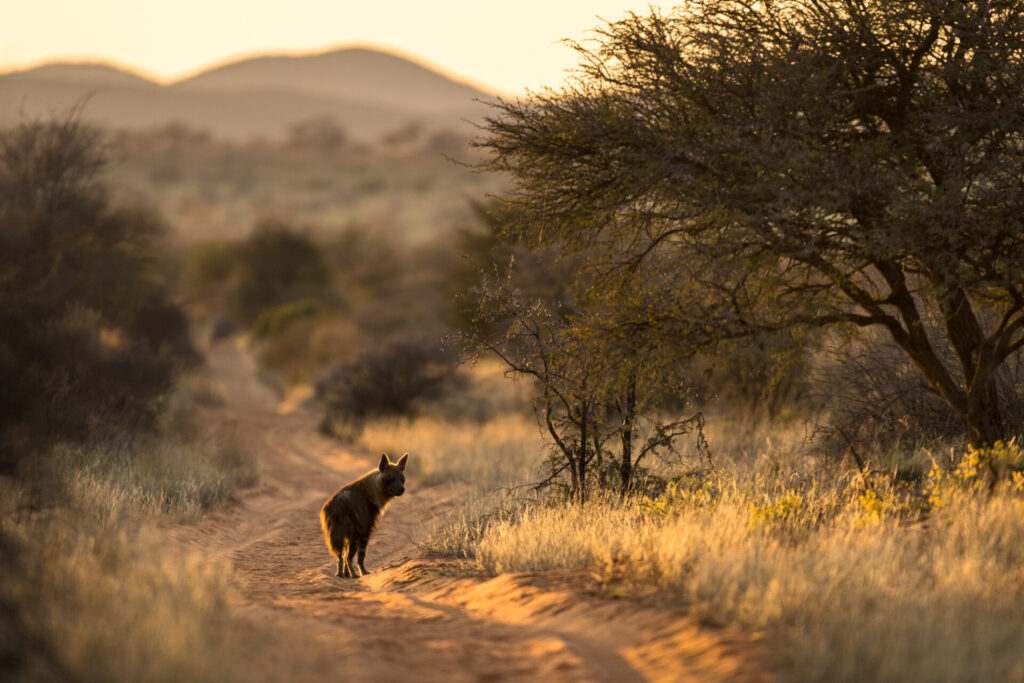
Tswalu’s dawn and dusk light often brings out nocturnal or elusive animals. What technical adjustments, camera settings, and focus strategy do you make to work in that light?
The darker it is, the more you have to compromise. Once your aperture is wide open, it’s a balance between raising the ISO by as much as you’re comfortable with, and lowering your shutter speed. Using smaller lenses gives you a bit more freedom, as does using a beanbag for support. As long as your subject behaves by not moving too quickly, that is. You can always use a spotlight, of course, though it’s important not to disturb our wild friends too much; fortunately, the guides at Tswalu are well aware of this, and avoid shining lights on animals whose eyes are less able to adjust between light and dark.
Beyond what makes it into your final images, is there a moment from your time at Tswalu that’s stayed with you?
So much! I love my late morning cups of coffee, watching nature do its thing without needing to worry about compositions or light. And that feeling when your vehicle crests another dune, opening up an entirely new vista – that’s just lovely.


