Into summer: night drives, active weaver colonies and returning migrants
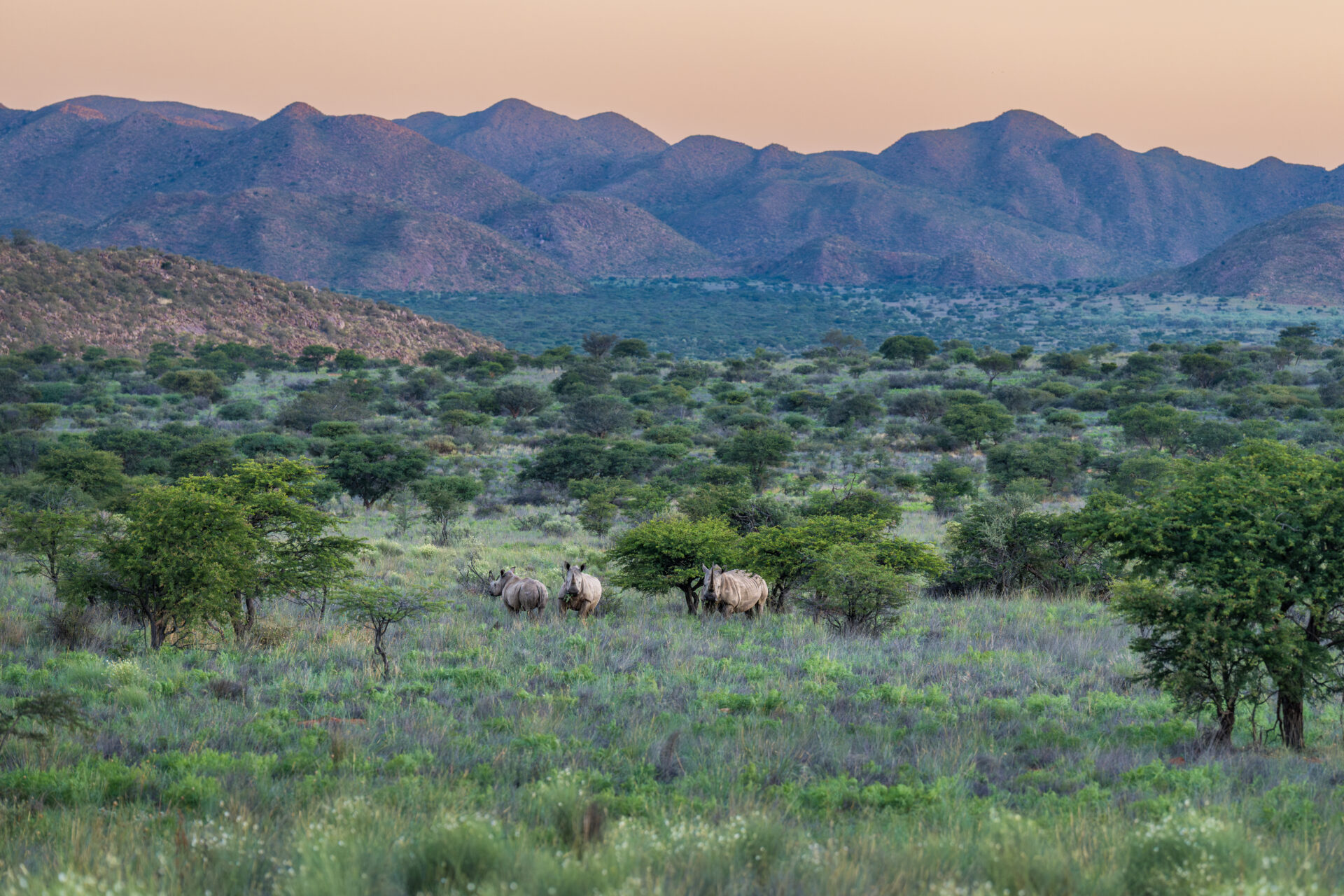
October has brought the first real heat of summer to the southern Kalahari, yet Tswalu is still looking green after a year of above-average rainfall. Devil’s thorn is flowering across the reserve, and the three thorns are now in full leaf, giving cover to the black rhinos that browse among them. Sightings of black rhino remain consistent.
With the sun rising earlier and daytime temperatures climbing, game drives have shifted into the cooler hours. Guides have been setting out before dawn and staying out on afternoon drives well after dark, and the reserve’s nocturnal species are making the change worthwhile. Aardvark, Cape fox and striped polecat have all featured on recent drives, the kind of sightings between sunset and sunrise that have long drawn guests to Tswalu.
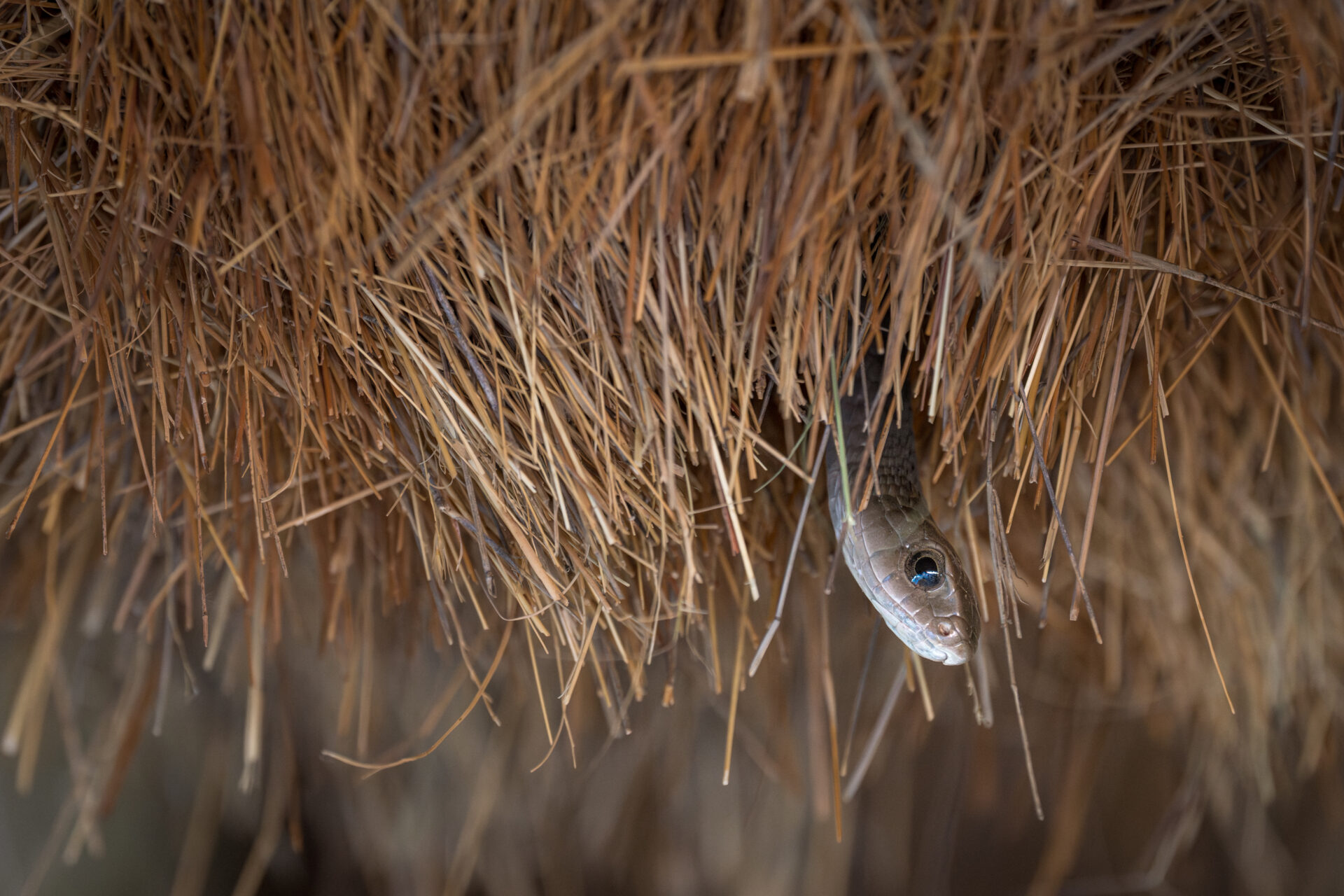
October is also when snakes become active again, and Cape cobras have been especially visible in sociable weaver colonies. The huge communal nests, built into camel thorn and Boscia trees, hold eggs and chicks. A cobra working its way between nest chambers is a sighting synonymous with the Kalahari and Tswalu. On a recent drive, guests watched a large Cape cobra cross the road and climb at speed into a tree after a bird. Elsewhere, guests saw meerkats and ground squirrels joining forces to mob a cobra encroaching on their territory. Puff adders and black spitting cobras have also been spotted.
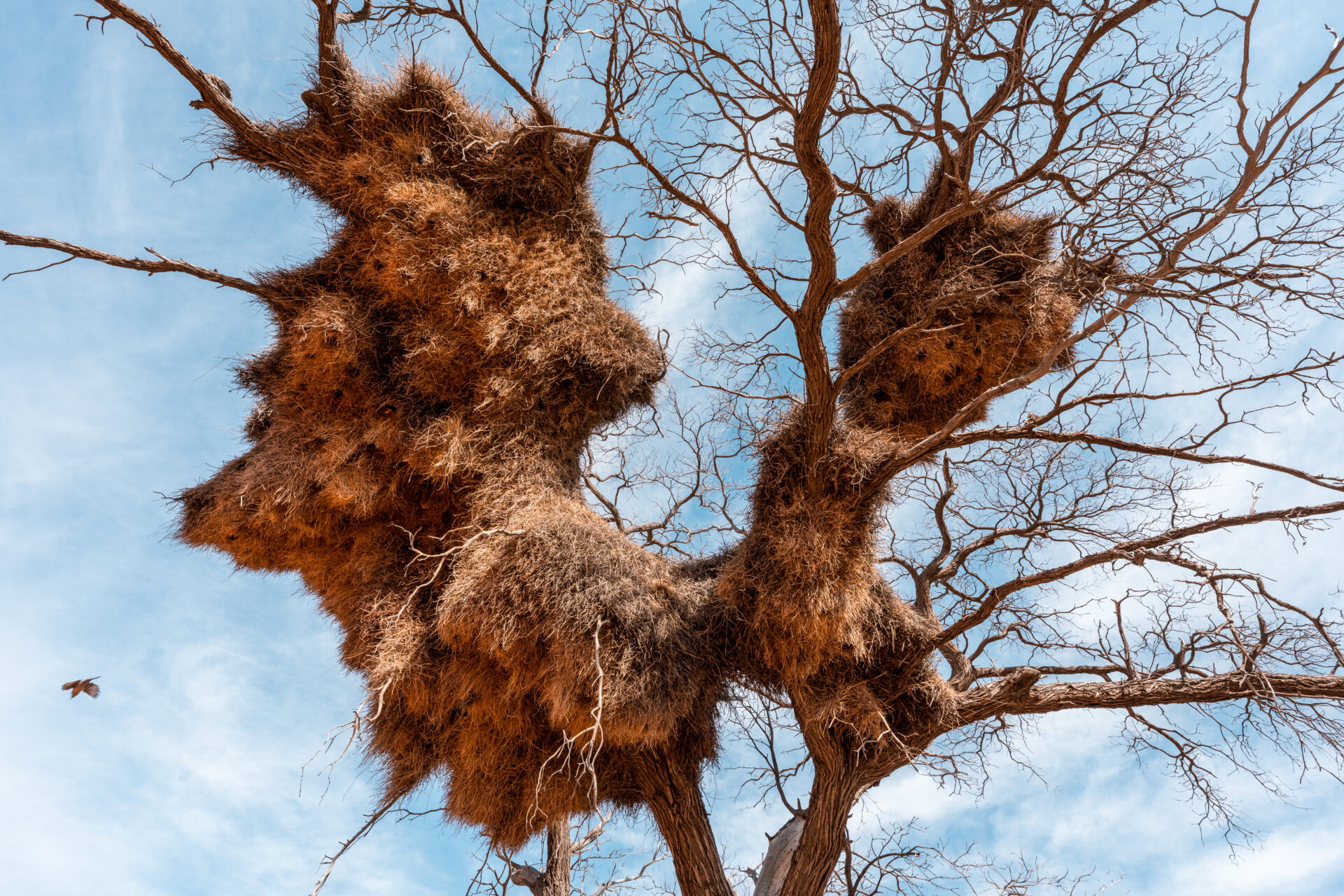
Sociable weaver nests are the subject of one of Tswalu’s longest-running research projects. Dr Rob Thomson has studied sociable weavers and the pygmy falcons that share their nests for more than 15 years. He recently presented his latest findings to the guiding team and at the 15th Oppenheimer Research Conference held in Johannesburg. Thomson’s work shows how the weavers act as ecosystem engineers, using camel thorn and Boscia across the landscape, and measures the costs and benefits of their colonies for the trees themselves.
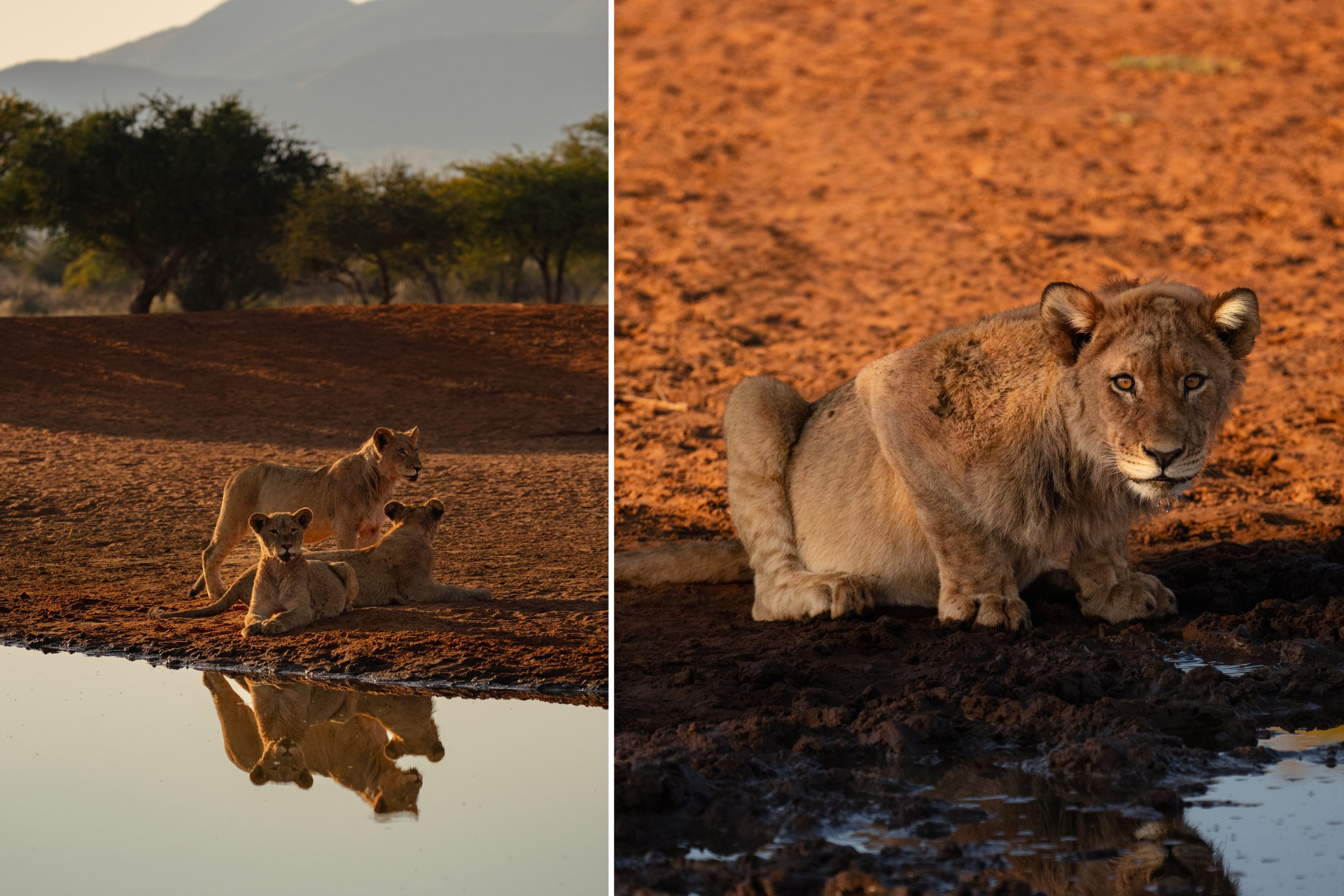
Predator sightings remain strong. Tswalu’s lions are doing well. Cubs in the South pride are now around 10 months old, and those in the North pride are just over a year, with the young males starting to show the first dark scruff of their manes. The wild dogs have been covering a lot of ground over the past few weeks, but sightings remain solid. A well-habituated female cheetah and her three sub-adults continue to provide regular sightings. A new meerkat group is being habituated, led by tracker Olorato, and pups have been seen recently.
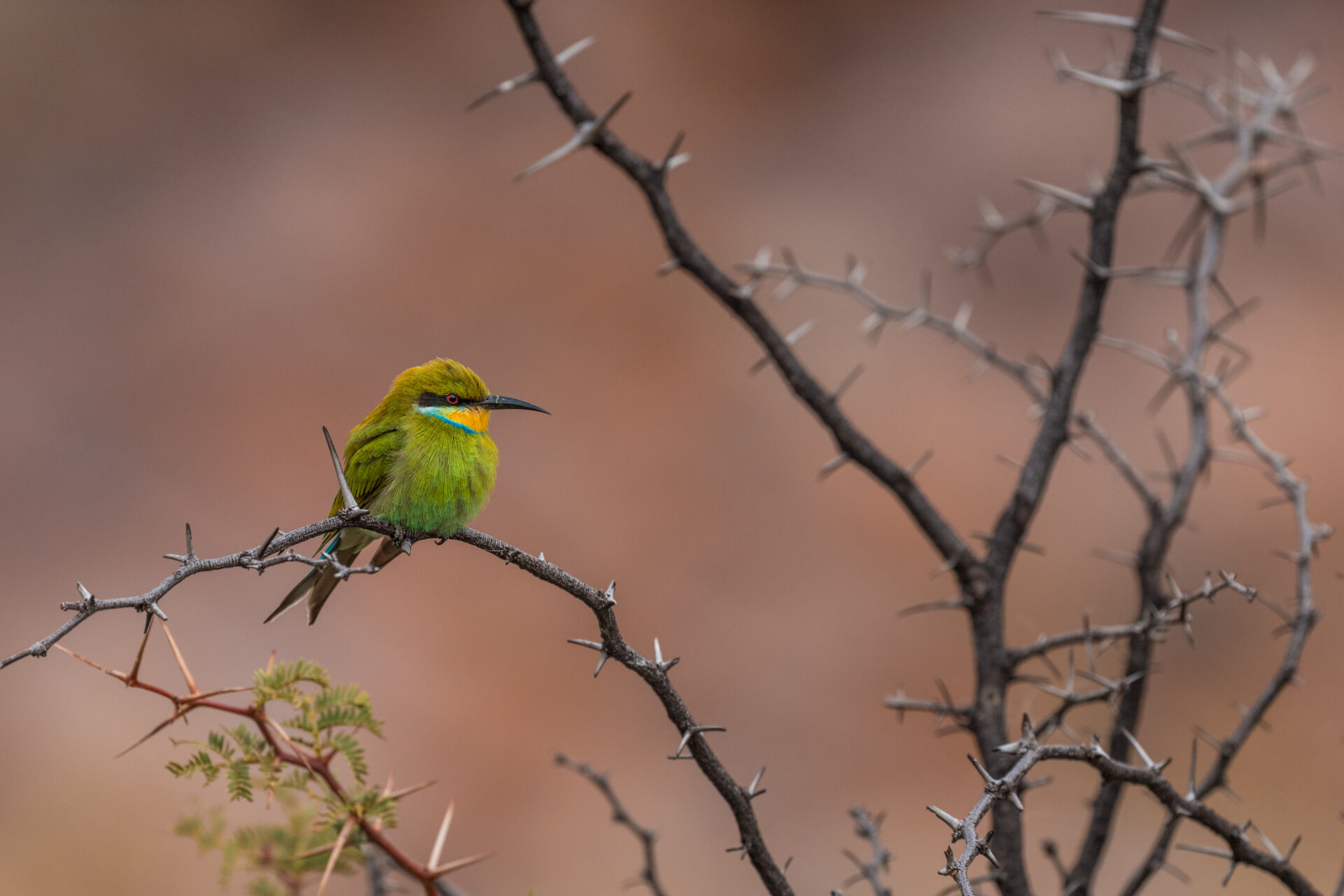
Summer migrants are arriving in numbers. Diederik and Jacobin cuckoos are calling; barn swallows and European bee-eaters are back; and swallows and swifts are everywhere. A red-breasted swallow at Tierpan was a rare find for the reserve. Red-crested korhaans are performing their display flights, launching straight out of the grass, a familiar sight in early summer.
DOWNLOAD THE CONSERVATION JOURNAL HERE
Images: Marcus Westberg


