Boscia: a restaurant shaped by the Kalahari
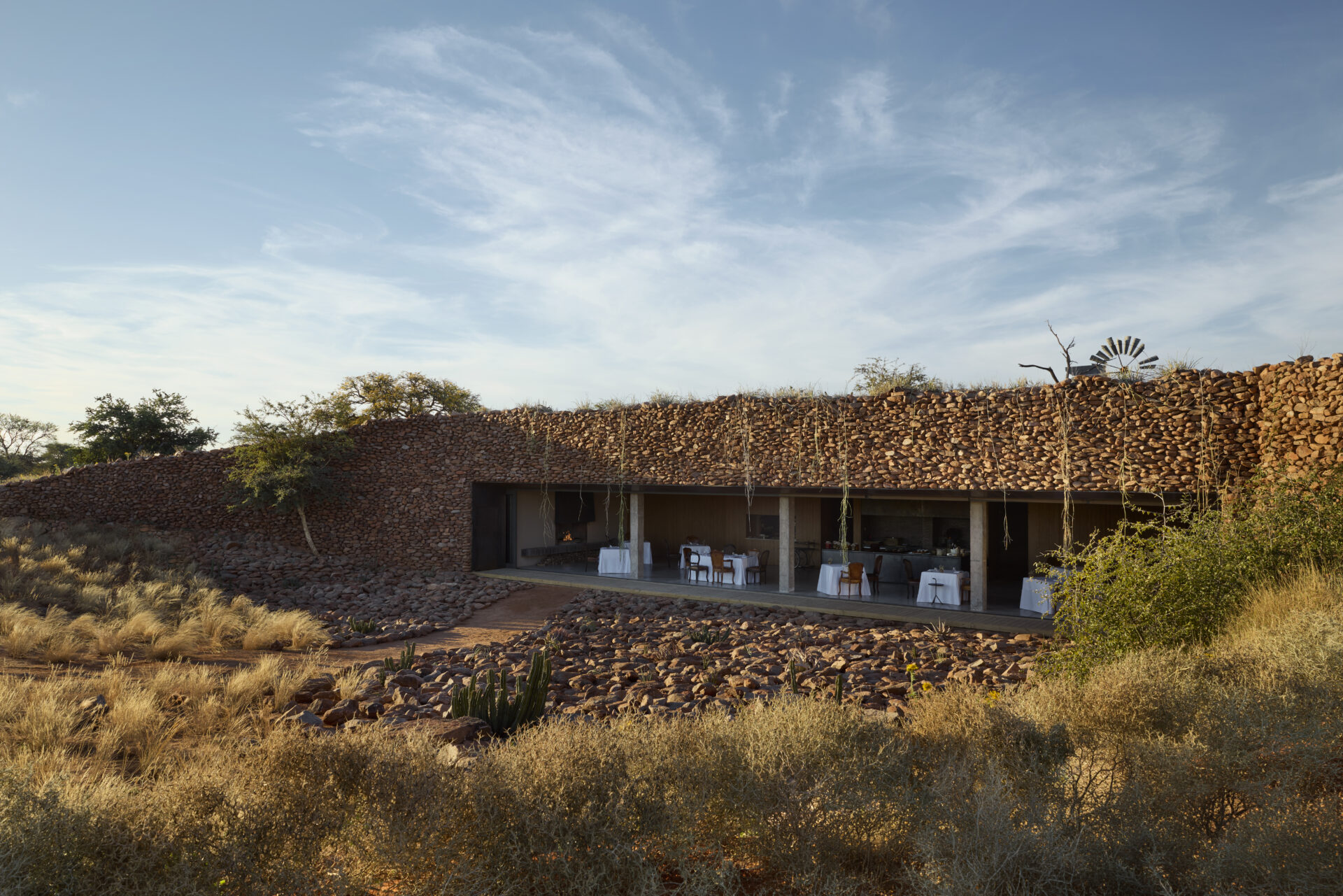
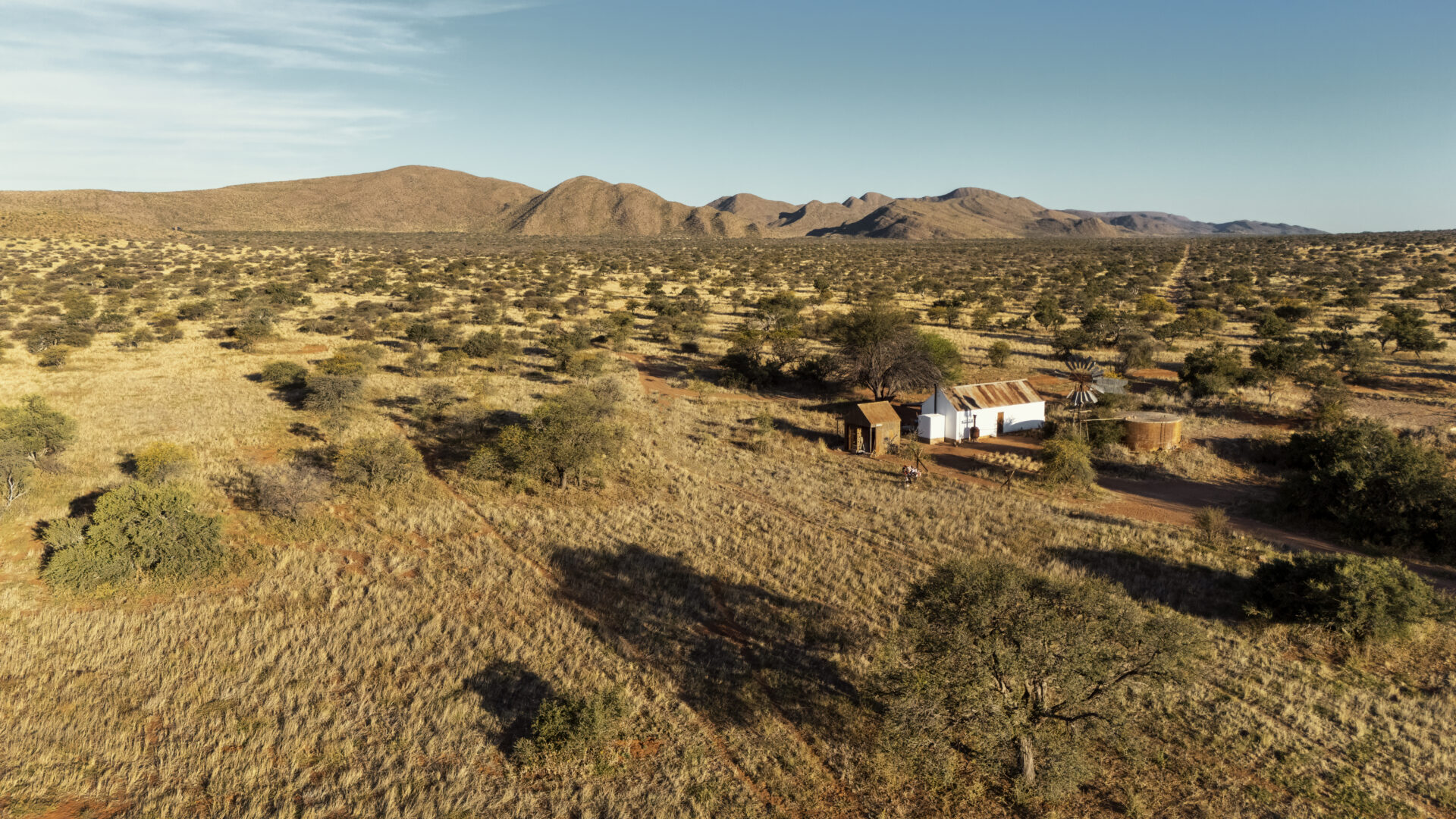
A day at Tswalu is shaped by choice. With a private vehicle, guide and tracker, guests decide how long to stay with a pride of lions, whether to follow a pangolin’s tracks or wait for meerkats to emerge with the morning sun. That same freedom now extends to the evening. Boscia, created under the creative direction of chef Luke Dale Roberts, occupies the century-old cottage and the underground spaces that previously housed Klein JAN. In this unique setting, Boscia has already been recognised for its remarkable sense of place, receiving the Haute Property award in the 2027 jhp Gourmet Guide.
The restaurant is named after Boscia albitrunca, the shepherd’s tree. In a landscape where surface water disappears for months at a time, it sends its roots deep into the earth to reach permanent groundwater. For generations, people crossing the semi-arid interior of the southern Kalahari read the tree as a sign that water lay below. Horticulturist Richard Hay describes the stand around the restaurant as the world’s largest congregation of the species, and the tree’s logic runs through everything at Boscia. Much of what matters most lies below the surface.
The evening begins above ground at Boscia House, a simple cottage with a deep stoep where guests settle after the afternoon game drive. The snacks served here are a nod to the safari sundowner, that much-anticipated pause in the field when the vehicle stops, and the cooler box opens. The first arrives with a clarified pumpkin-spiced milk punch, poured at the table, and the Kalahari Picnic comes in a basket handwoven by the Cape Town Society for the Blind, each one unique.
From the cottage, a spiral staircase descends five metres through an old water reservoir. It is named the petrichor stairwell, after the scent of rain on dry earth, and the cascading water has a calming effect as guests make their way into the root cellar below. Here, the kitchen’s work is on display: over 180 jars of fermented, pickled and salt-packed ingredients made at Boscia, clay imprints of Kalahari plants by ceramicist Roché Muller, and a wine collection drawn from the region and beyond.
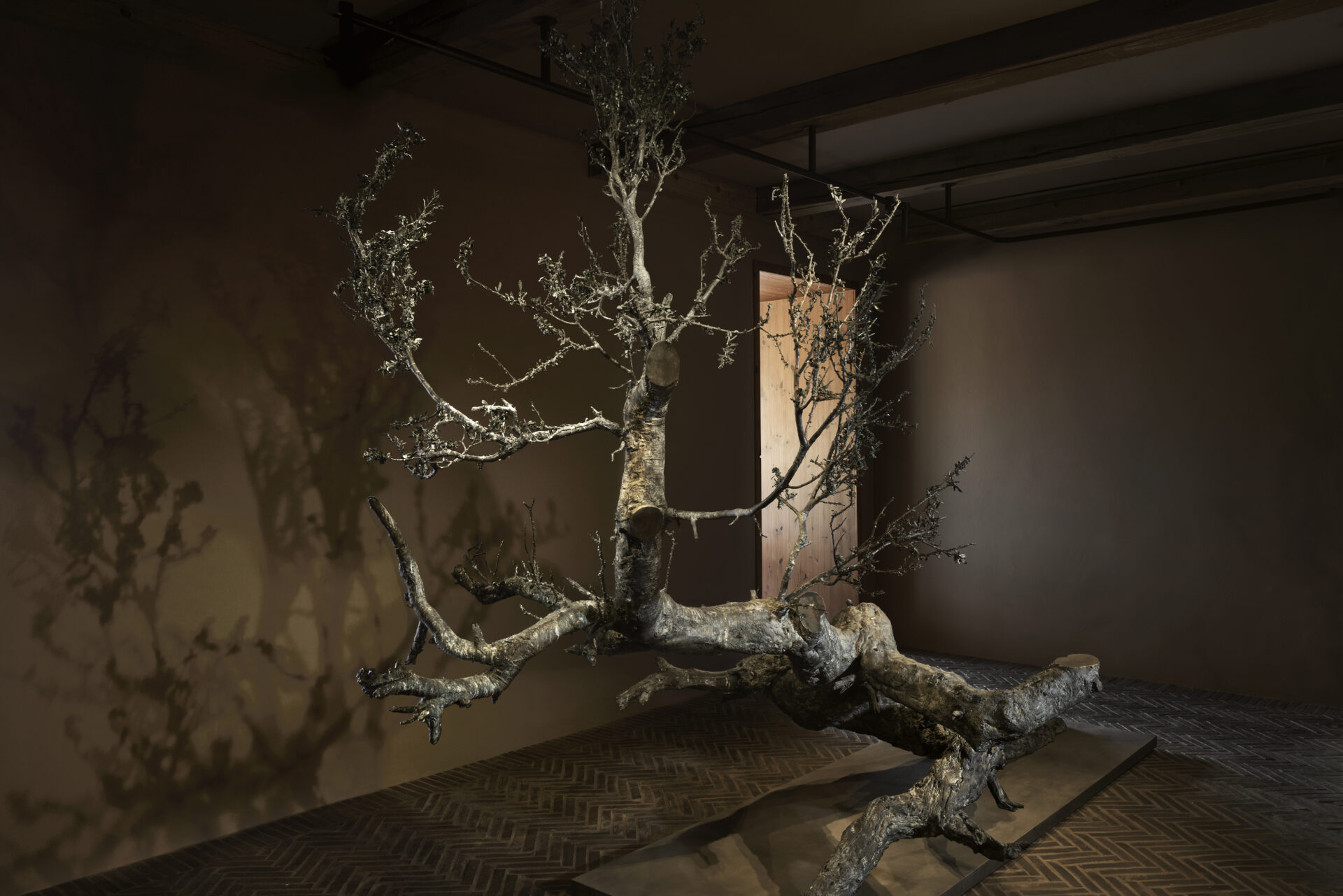
Between the cellar and the dining room, a bare gallery holds Nic Bladen’s life-size bronze of a shepherd’s tree. Bladen was artist in residence at Tswalu in 2015, and he cast the bronze from a tree he passed every day on his walk to the studio. That tree still grows nearby.
The dining room is washed in a single soft colour, between sand and light clay, so the eye moves past the tables to the Kalahari framed by a wall of glass. “We would like guests to feel as though they are sitting inside the body of a Leica camera,” says Burger, “looking out towards nature through the most majestic lens.” On the largest wall, he has created an installation from dune broom, Crotalaria spartioides, a short-lived Kalahari shrub that dries from green to straw and gradually works loose from the dunes. Gathered on the reserve and massed into a piece about 4.5 metres wide, its pale tufts recall clouds building before a summer storm, and soften the acoustics of the room.
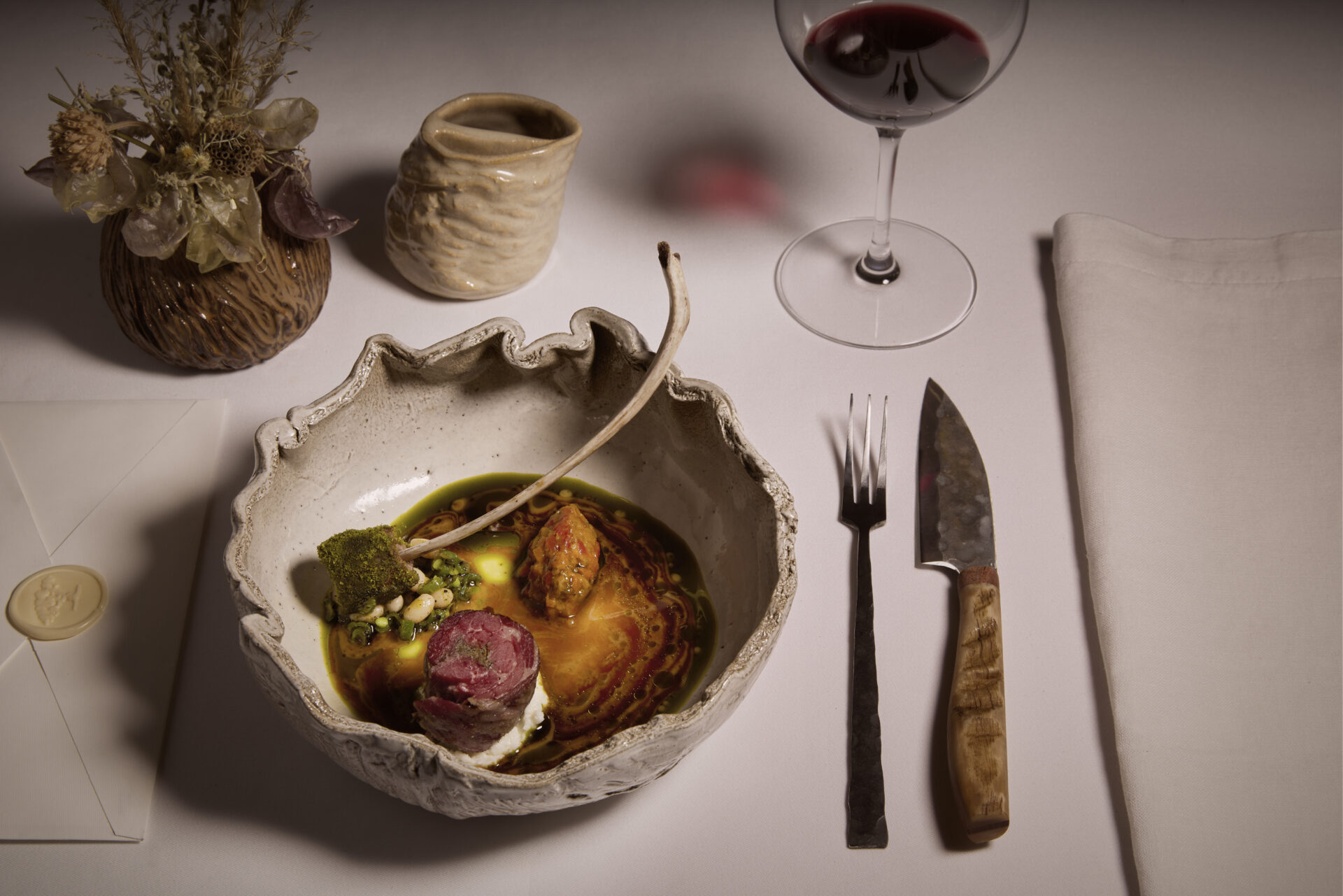
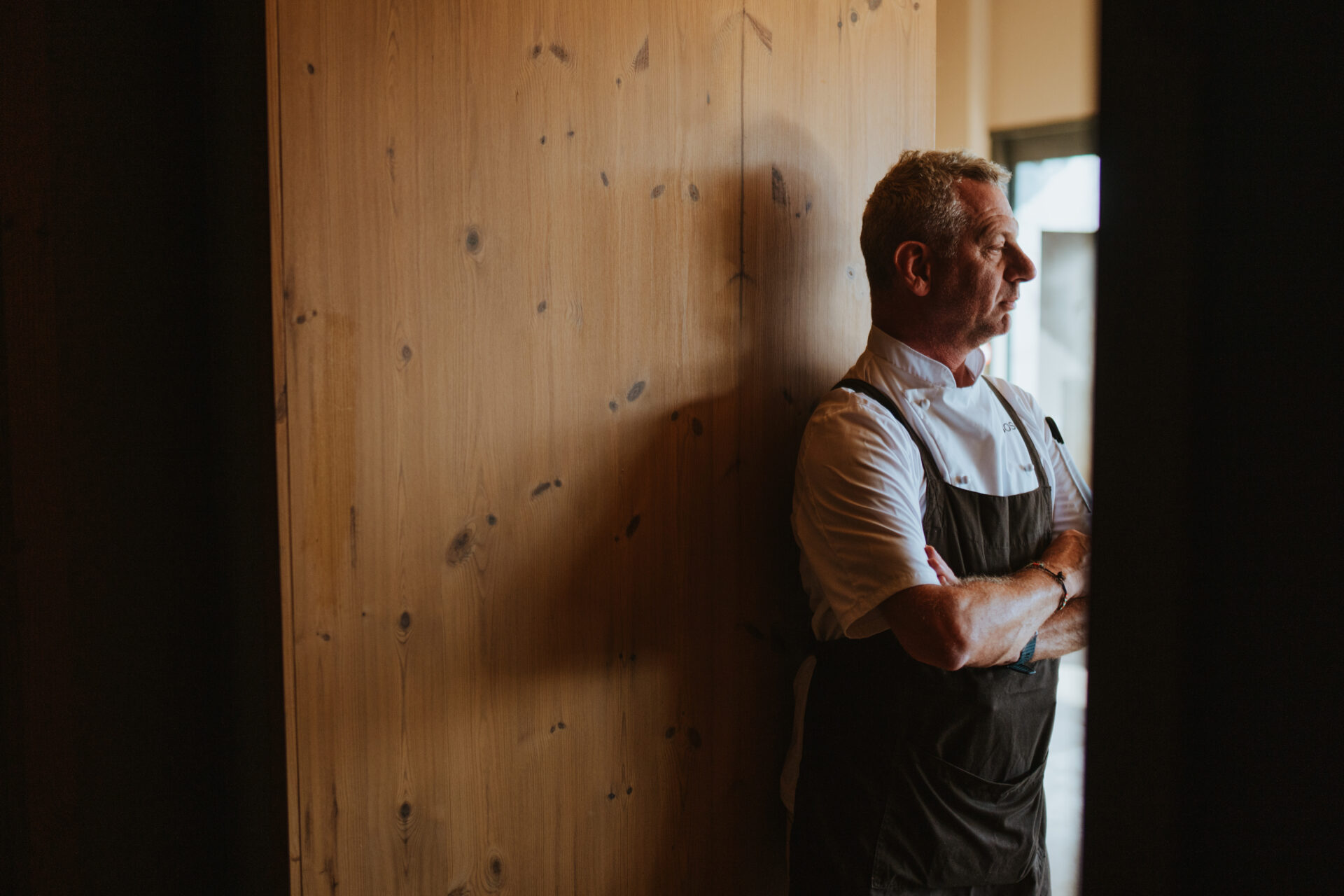
Luke Dale Roberts describes his cooking at Boscia as an exercise in clarity. “If you have an extraordinary ingredient, perhaps the most respectful thing you can do is cook it beautifully and allow it to taste like itself,” he says. Head chef Dillan Kannemeyer, who led the kitchen at Salon in Cape Town, calls the result “the world meeting the Kalahari”. The five-course menu offers a choice at every course and changes with the seasons and the availability of ingredients. With only five courses, each dish has to justify its place, and Dale Roberts has become increasingly interested in whether an element makes the food better or simply more complicated. Often, taking something away allows the central ingredient to become more expressive, and that restraint shapes the whole menu. Venison, tsamma melon, wild herbs, honey and Kalahari salt feature, alongside preserved elements drawn from the cellar, and almost all of the meat is sourced through a butcher based in the Kalahari. Each course comes with a suggested South African wine pairing or a non-alcoholic herbal infusion, and pescatarian, vegetarian and vegan menus are prepared with the same care.
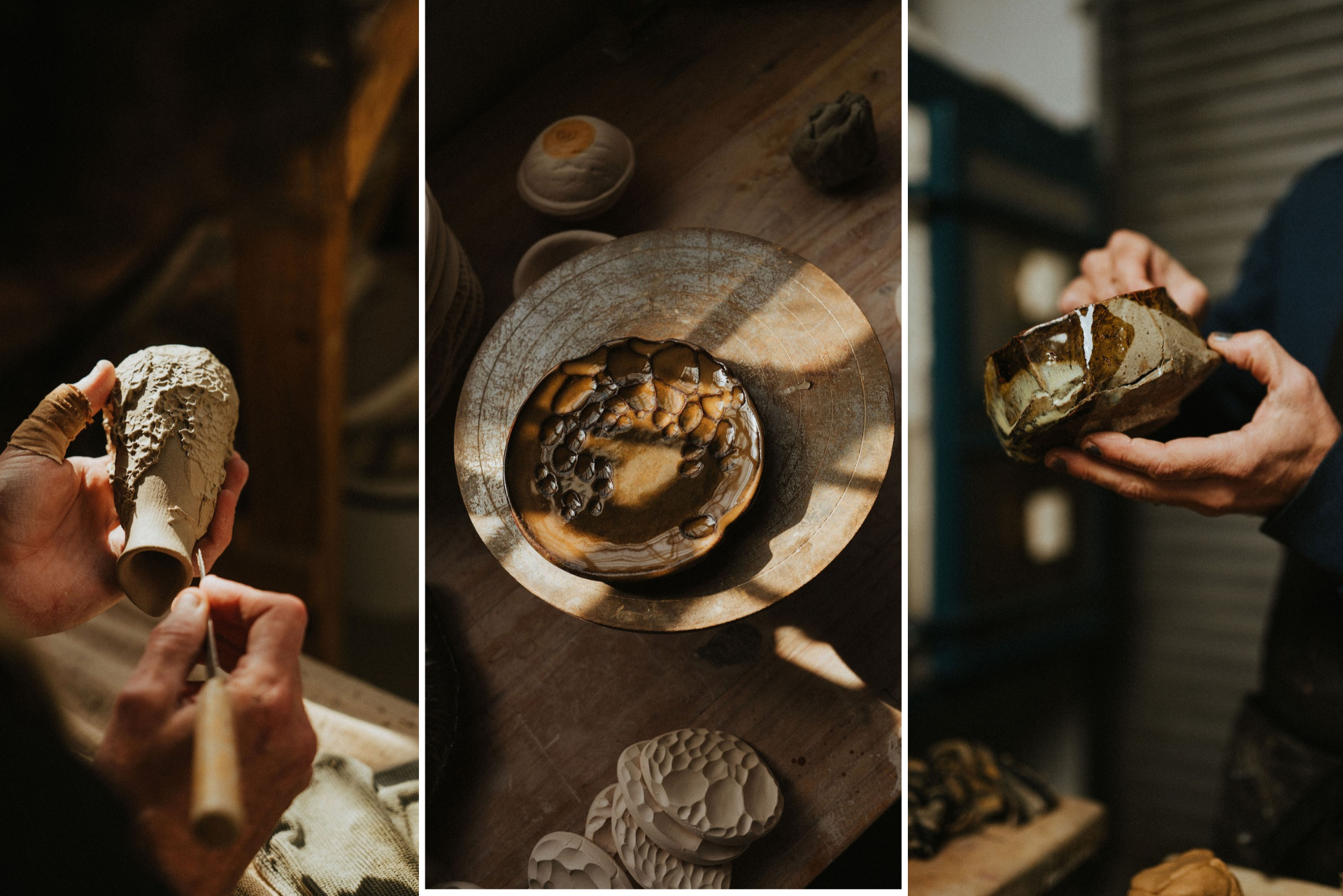
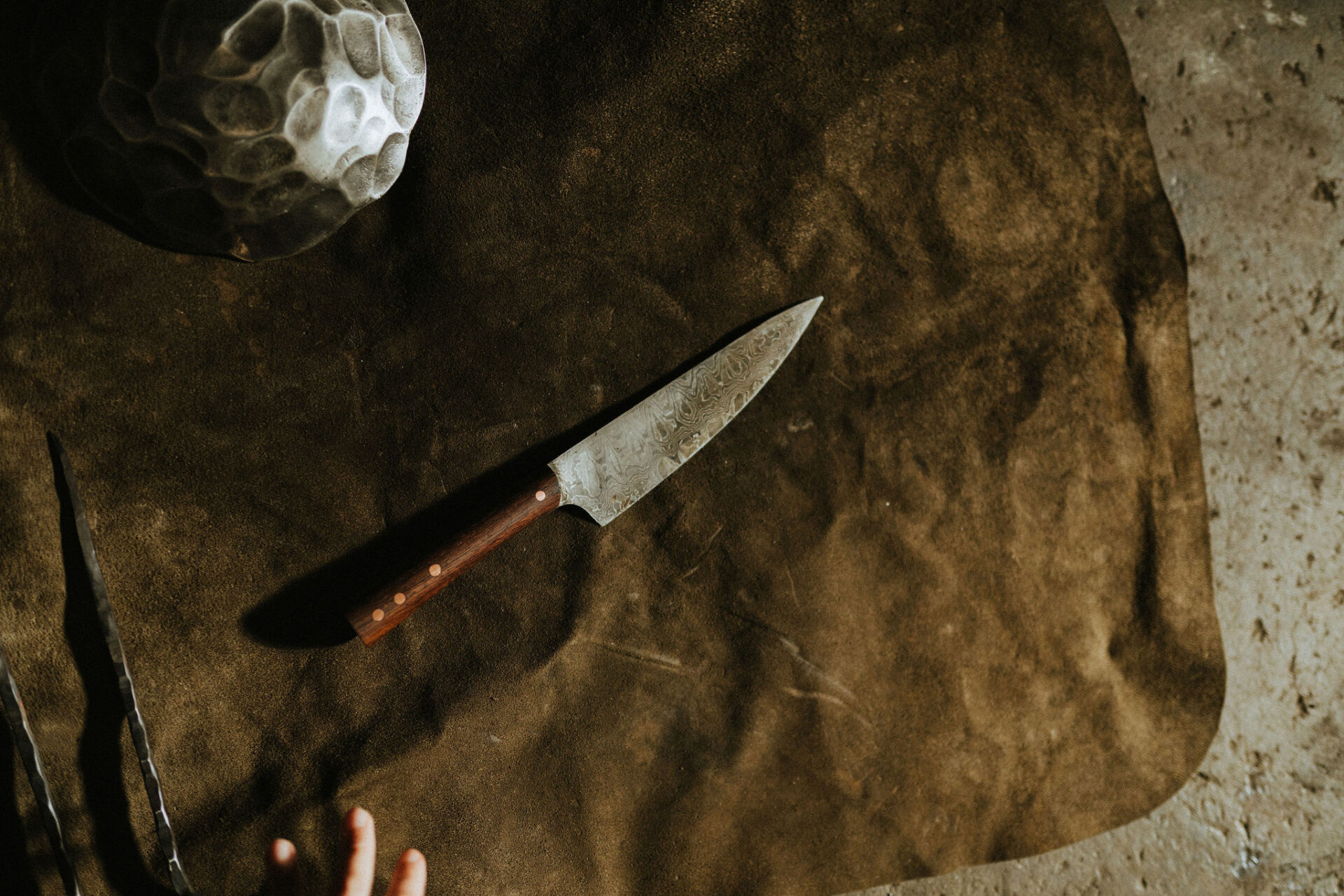
When it came to the tableware, every vessel, board and knife was commissioned after conversations between the chefs and South African artists and makers, including Roché Muller, Conrad Hicks, Wim Botha, Anton Kock and Hadley Craig. Every object on the table was created for a specific dish. Pork belly is carved at the table and returned, still sizzling, to a steel bowl hammered by Hicks. For the main course, knives of camelthorn wood and ramshorn by Kock are drawn from leather pouches made by Craig.
One dinner at Boscia is included for guests staying two or more nights at Tswalu. Boscia is also open to the public for Saturday lunch, with bookings opening on the first of each month for the following month. Bookings for lunch are through Dineplan (click here)
Images: Elsa Young, Chris Joubert


