African wild dog conservation
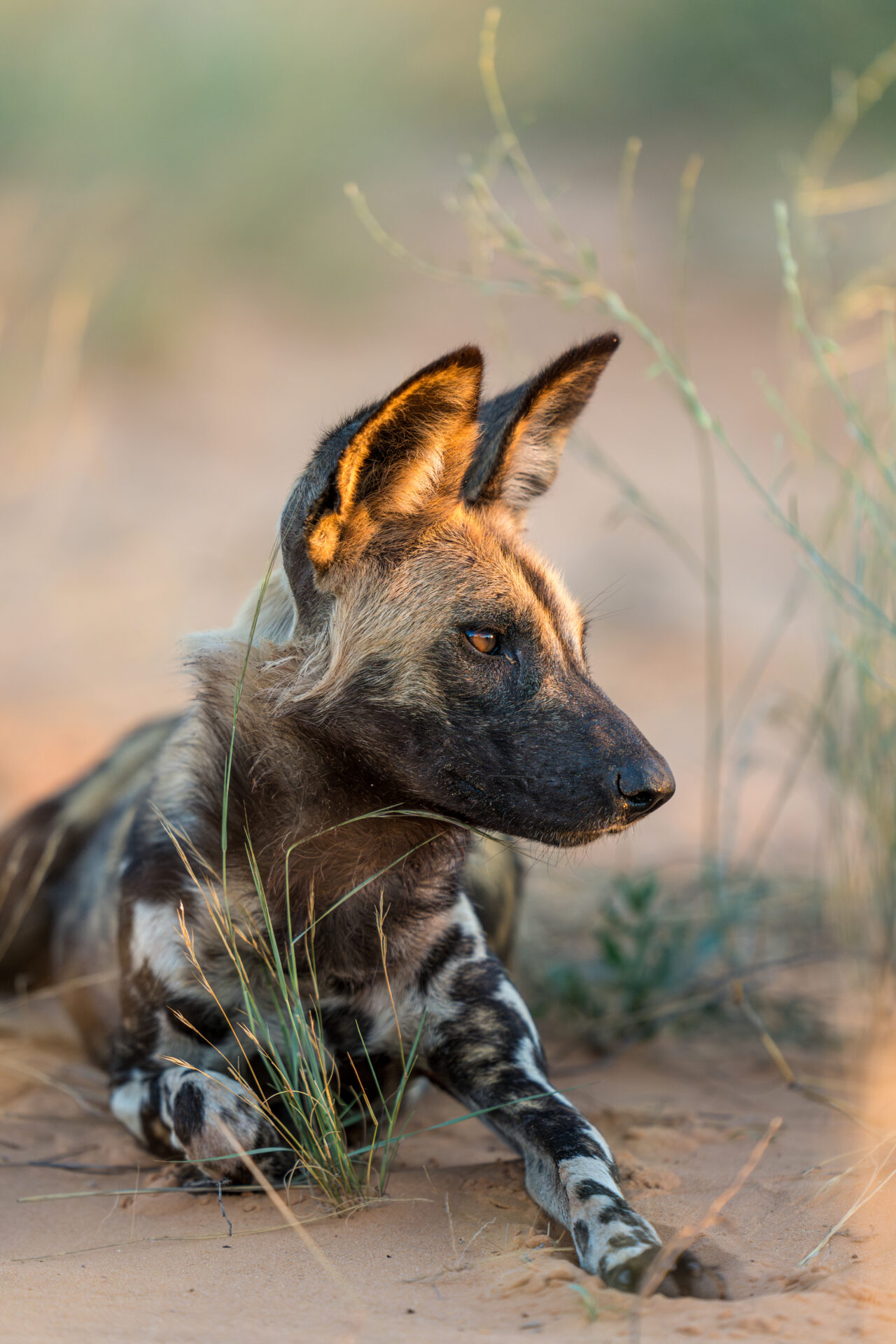
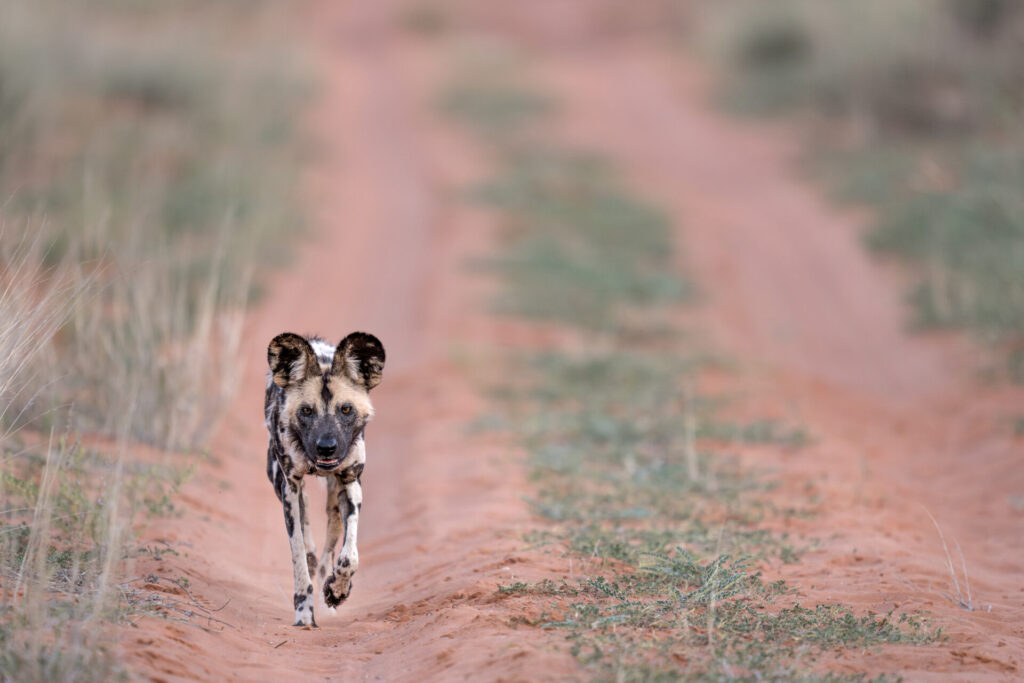
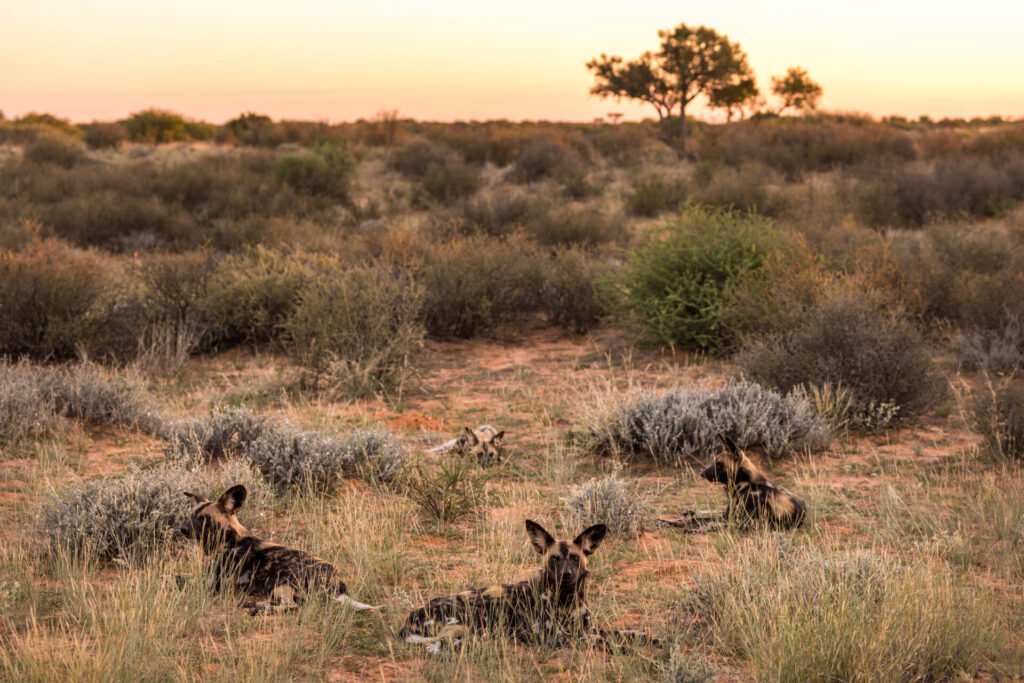
As the largest privately protected area in South Africa, Tswalu offers space for these wide-ranging animals, something increasingly rare in modern conservation landscapes. Tswalu currently supports a single pack, which roams the entire Korannaberg section, an area of approximately 100,000 hectares. That range alone illustrates why space is not merely a feature of wild dog conservation, but a prerequisite for it.
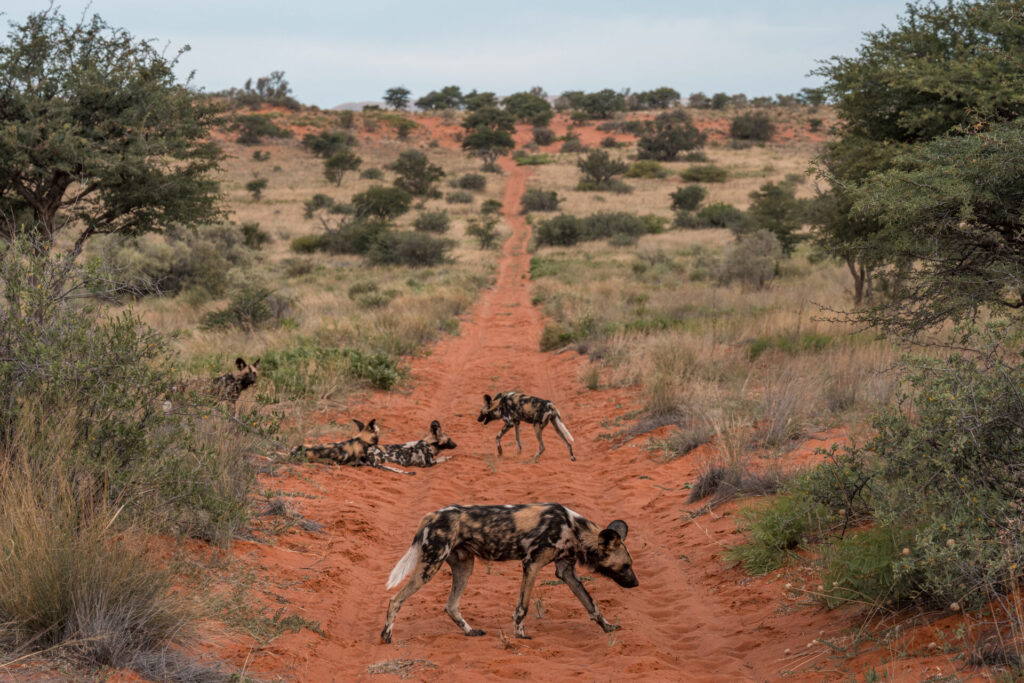
The complexity of managing an endangered predator
Conserving wild dogs within a fenced reserve is not simply a matter of providing habitat and stepping back. It requires active, ongoing management.
Tswalu’s resident ecologist, Dr Wendy Panaino, is candid about the realities. “When you place a fence around an area, you will have to manage it at some level,” she explains. “In an open system, nature can find balance between predator and prey, given time and space. In an enclosed system, that process can be thrown off balance when animals have limitations created by physical barriers.”
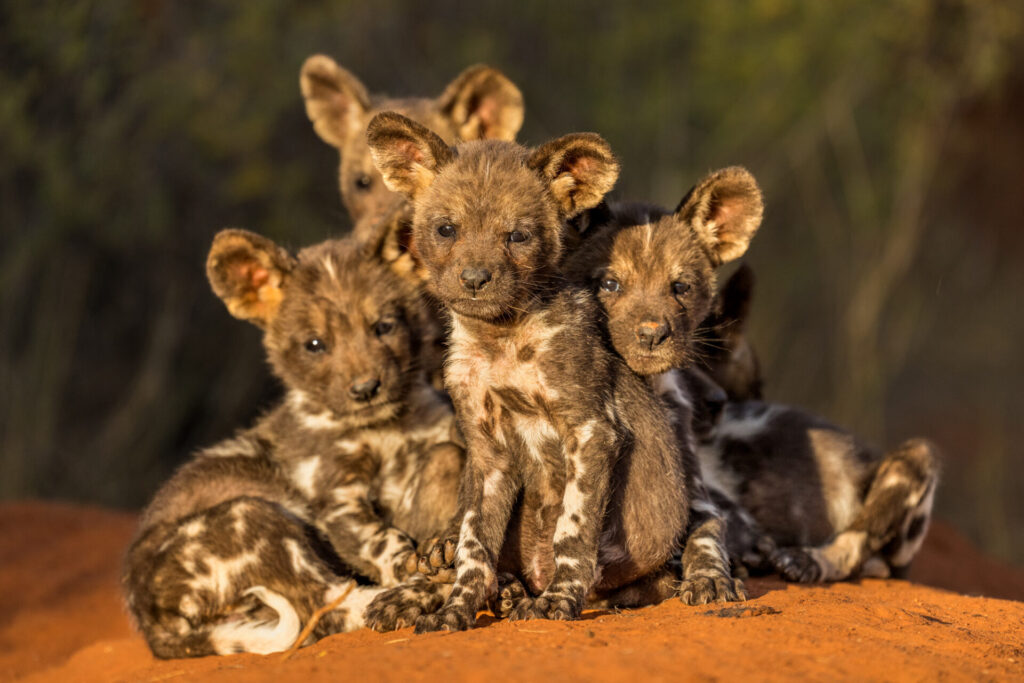
Wild dogs compound this challenge in several specific ways. Their breeding output can be exceptional – a single litter can exceed 10 pups, meaning a pack’s size can increase fivefold in one season. Young wild dogs that would naturally disperse to establish new territories elsewhere have nowhere to go within a fenced reserve. Left unmanaged, this creates pressure on prey populations, increases the risk of inbreeding, which threatens genetic integrity, and raises the likelihood of fence breaches, with potential implications for neighbouring landowners.
Pack dynamics add another layer of complexity. Wild dog society is structured around a dominant alpha pair. If either alpha is lost, the pack can destabilise rapidly, triggering fragmentation and the associated dispersal pressures that enclosed systems are least equipped to absorb.
“We have a responsibility to manage,” says Dr Panaino, “given that we, ourselves, have created the barriers.”
The EWT’s role: coordination at landscape scale
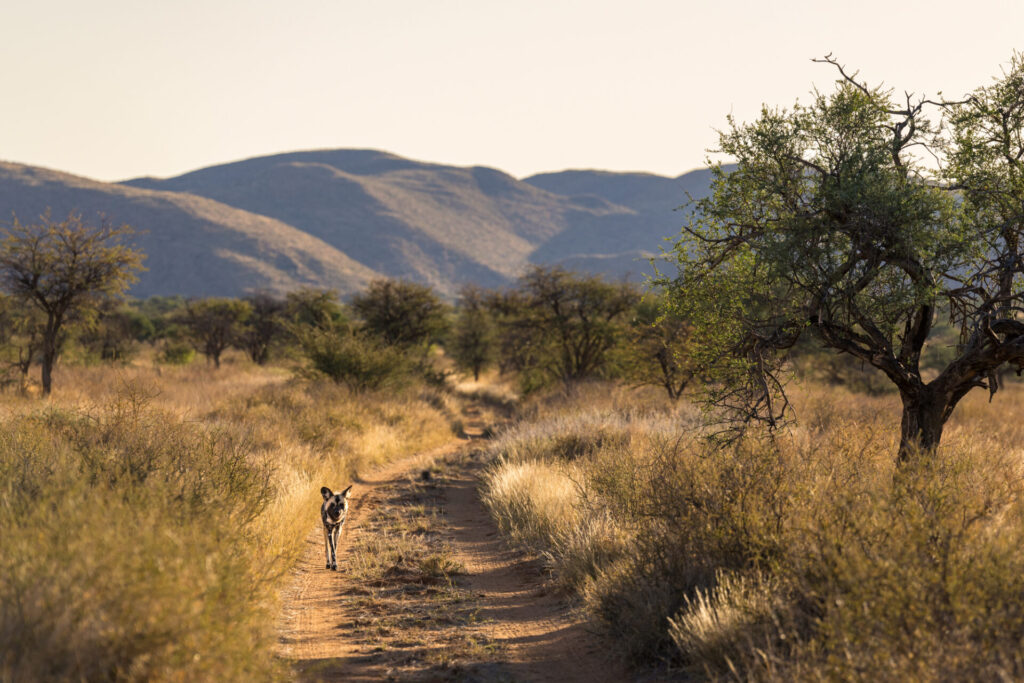
This is where the Endangered Wildlife Trust enters the picture. Eugene Greyling, Carnivore Conservation Field Officer at the EWT, coordinates the Wild Dog Range Expansion Project (WDREP), a managed metapopulation approach that has been implemented and has been operating since 1998 and currently accounts for almost 10% of the world’s non-captive African wild dogs.
The metapopulation model works by mimicking, through careful human intervention, the natural processes of dispersal and gene flow that fenced landscapes can no longer support on their own. New packs are formed from unrelated individuals; animals are translocated between reserves to maintain genetic diversity; and the broader population is actively monitored and managed as an interconnected system across southern Africa.
“It is not enough to only save individuals,” says Greyling. “We must also restore processes.”
Since 2016, Tswalu has directly contributed 19 individuals to reintroduction efforts nationally and internationally, including in Mozambique and Malawi. Many of those individuals have gone on to breed successfully, extending Tswalu’s contribution well beyond the numbers.
A translocation with a double purpose
The most recent chapter in this story reflects precisely how the model works in practice. A newly formed pack – assembled from unrelated males and females, including dispersal-age females originally from Tswalu – has been translocated to a reserve where wild dogs had previously gone locally extinct. In a single coordinated move, the species has been reintroduced to a landscape it once occupied, a new pack has been given the space to establish itself, and pressure on Tswalu’s system has been meaningfully relieved.
“The removal of dispersal-age females from Tswalu’s subpopulation at this time not only enables this reintroduction,” explains Greyling, “but also reduces the pressure on both the donor reserve and management, allowing for local system persistence into the future. A translocation like this becomes a win-win.”
Identifying suitable recipient reserves is far from straightforward. Candidates must meet a demanding set of criteria: sufficient prey base, managed predator guilds, stable governance, adequate fencing, community buy-in, and low conflict interfaces with surrounding land users. Not all ecologically viable landscapes are socially or institutionally ready. Greyling describes the assessment process as necessarily holistic – ecological and social factors influence one another in ways that make linear predictions unreliable.
A system under pressure
South Africa has, until recently, been the only country with a recorded increasing wild dog population – a direct result of active metapopulation management. But that success has created its own constraint. Population growth has begun to outpace the rate at which safe, suitable space can be secured.
“We refer to it as the ‘success’ paradox,” says Greyling. “Success generates its own constraint, requiring us to become innovative to stabilise the system.”
The consequences of unmanaged predator populations are well documented, and not only in theory. In South Africa’s fragmented, fenced reserves, declining prey numbers, fence breaches, and pack instability all play their part. The challenge for conservationists is to intervene early enough to prevent cascade effects, while maintaining the integrity of natural behaviours. It demands constant vigilance, robust data, and the willingness to make difficult decisions in service of the broader population.
What Tswalu’s commitment means
For a reserve of Tswalu’s size and ethos, the role is clear. “Tswalu forms a fundamental, very important component of the managed metapopulation,” says Greyling. “Safe space is the key limiting factor for wild dogs. African wild dogs are no longer biologically independent; they are logistically dependent assets, requiring active life support. As a large, well-managed protected area, Tswalu provides a crucial lifeline and safe haven, allowing them to naturally persist.” Tswalu continues to make a measurable contribution to metapopulation growth, and the impact extends further still. As a flagship, keystone, and umbrella species, wild dogs benefit not only themselves but every species that shares their landscape. Tswalu’s commitment to biodiversity restoration, research and habitat preservation, combined with its focus on immersive, educational guest experiences, makes it an exceptionally powerful platform for that broader conservation dividend.
Images: Marcus Westberg


