What to pack for a Kalahari safari
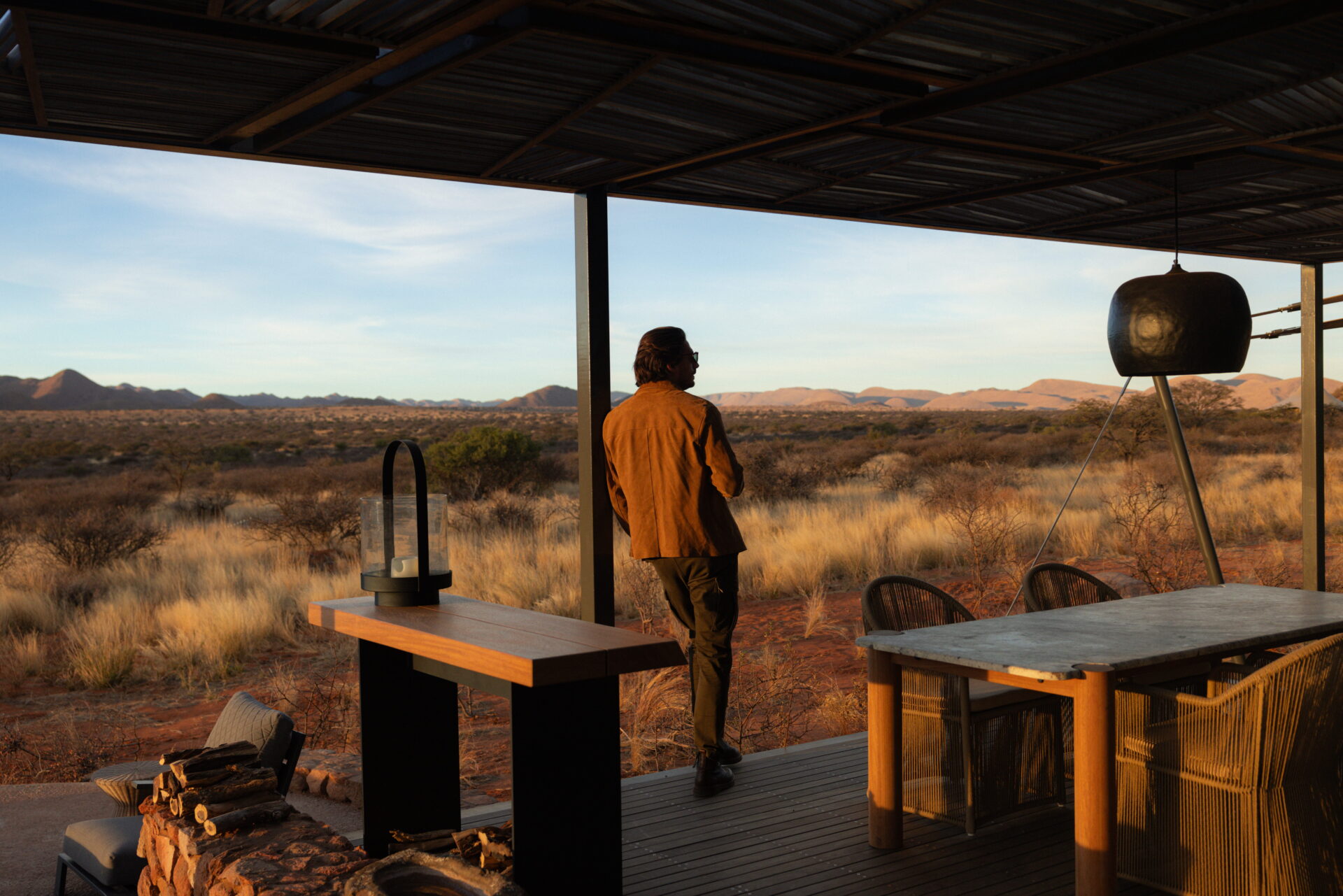
There are only a few places on earth where the temperature swings as dramatically as the Kalahari. On a winter morning, as your game drive vehicle moves through the semi-darkness before dawn, the cold can be startling. By midday, your jacket will be long abandoned, and the sun will be pleasantly warm. Come back in summer, and the heat at midday is immense, yet the evenings may still carry a chill that catches first-time visitors by surprise. One principle shapes everything else: layers. The Kalahari demands adaptability, and your clothing should, too.
Understanding the seasons at Tswalu
Tswalu sits at the southern end of the Kalahari, in the Northern Cape. The reserve experiences a true semi-arid climate, with distinct seasons. In winter (May to August), days are clear, sunny, and often beautifully warm, but mornings and evenings on an open game vehicle can be genuinely cold. Night temperatures regularly drop to near-freezing and occasionally fall below. A proper warm layer is non-negotiable. Summer (November to March) brings heat and afternoon thunderstorms. Daytime temperatures can exceed 40 degrees Celsius. Evenings remain warm but can freshen noticeably once the sun sets.
Layers, colours, and footwear
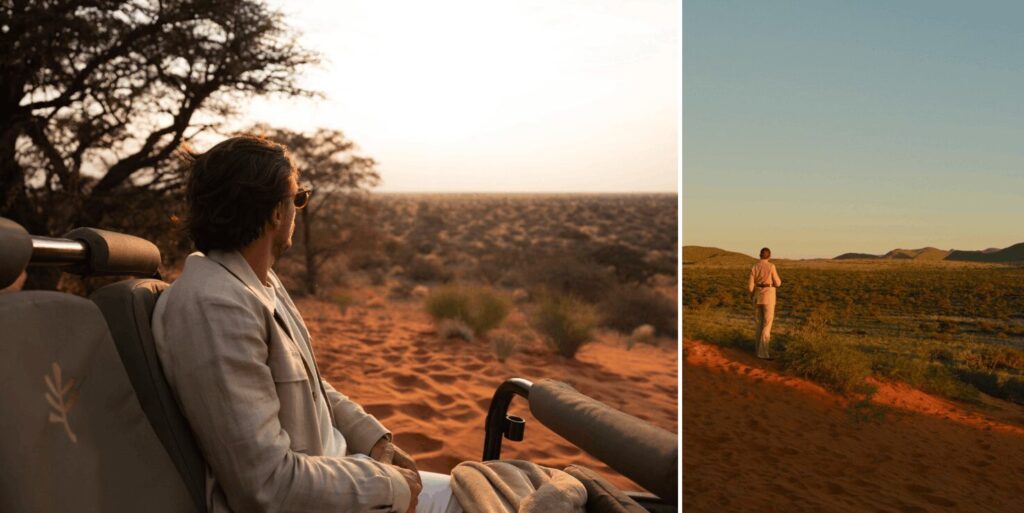
Think of your packing in three layers: a base layer to manage moisture, a mid layer for warmth, and an outer layer for wind and rain. In the Kalahari, the range within a single day makes this more relevant than on most safaris.
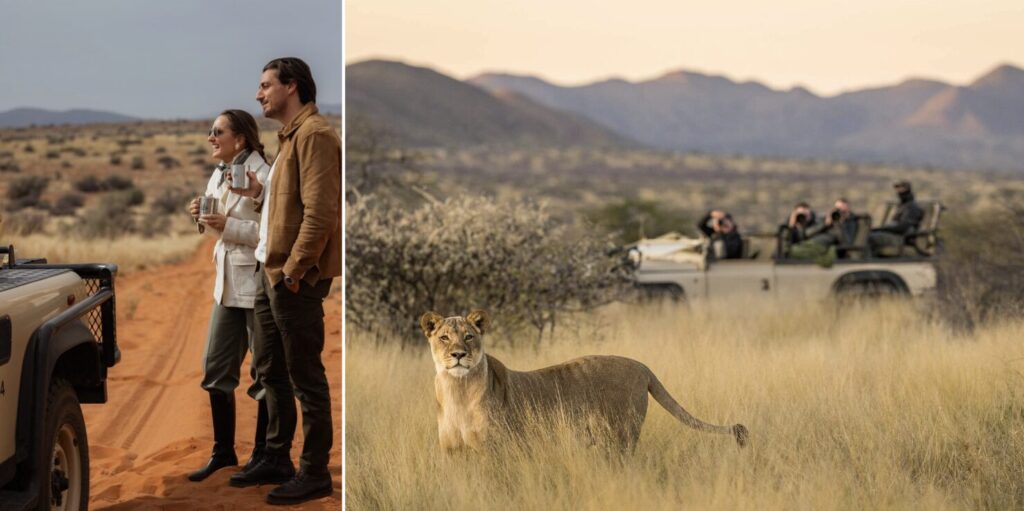
Safari clothing is muted in colour for a reason. Khaki, taupe, olive, tan, warm brown – these are the tones of the Kalahari, and wearing them allows you to blend into the landscape, especially on foot.
Clothing checklist
For most stays at Tswalu, three to four nights of clothing is sufficient. Laundry is returned the same day, meaning you can travel lighter than you might expect.
Base layers and shirts:
- Lightweight, moisture-wicking long-sleeved shirts
- Short-sleeved shirts or T-shirts
- A thermal base layer for winter visits
Trousers and shorts:
- Lightweight trousers or leisurewear in safari tones for game drives
- Lightweight shorts for summer
- Comfortable trousers or a casual dress for evenings in camp
Warm layers:
- A fleece or lightweight down jacket. Essential for any season, but particularly for winter game drives. The open vehicle creates wind chill that intensifies the cold considerably
- A thermal base layer for winter visits
- A beanie and lightweight gloves for winter
- A warm scarf or buff
Wet weather:
- A lightweight, packable rain jacket for the summer months when afternoon thunderstorms arrive quickly
Evening wear:
- Tswalu has a relaxed elegance at mealtimes. There is no formal dress code. If you want, one or two smart casual outfits for dinner
Footwear:
- Comfortable walking shoes or light hiking shoes
- Sandals or flip-flops for time in camp and around the pool
Sun protection:
- The Kalahari sun is relentless, and at this latitude, it is strong even in the cooler months
- A wide-brimmed hat
- SPF 50+ sunscreen
- Sunglasses with polarised lenses
Toiletries:
Tswalu provides shampoo, conditioner, body wash, and insect repellent in all guest rooms, so you can reserve space in your toiletry bag for specialist products you can’t live without.
Binoculars:
A pair of binoculars is perhaps the single item that most transforms your game viewing experience, moving you from spectator to participant. Look for 8×42 or 10×42 as the ideal safari specification: powerful enough to pick up detail at distance, with a wide enough field of view to track moving animals, and sufficient light-gathering for the low light of early mornings and the golden hour before sunset. If you are investing in a pair, buy the best optics you can afford. The difference between entry-level and mid-range binoculars is significant, especially in low light.
Luggage:
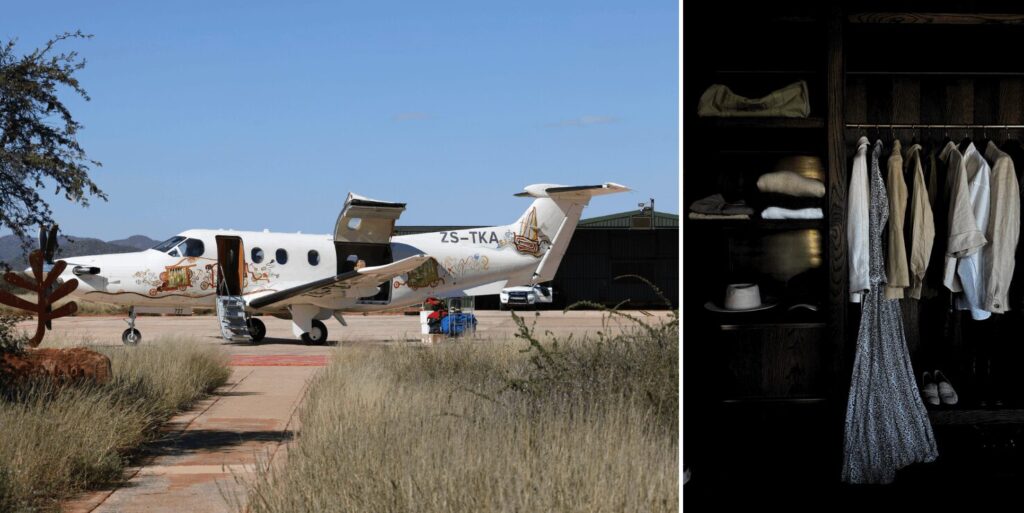
Access to Tswalu is via a light aircraft transfer from Johannesburg or Cape Town. These flights are operated on small aircraft with strict luggage limits, typically 20kg per person, including hand luggage, packed in a soft-sided holdall or duffel bag. Hard-sided suitcases cannot be accommodated in the hold of a light aircraft.
The instinct when packing for safari is to bring too much. The constraints of light aircraft luggage limits are, in practice, a gift. They force you to pack precisely and travel lightly, and most guests discover by the end of their stay that they used far less than they imagined they would need.


