Summer’s most fascinating migration is winged
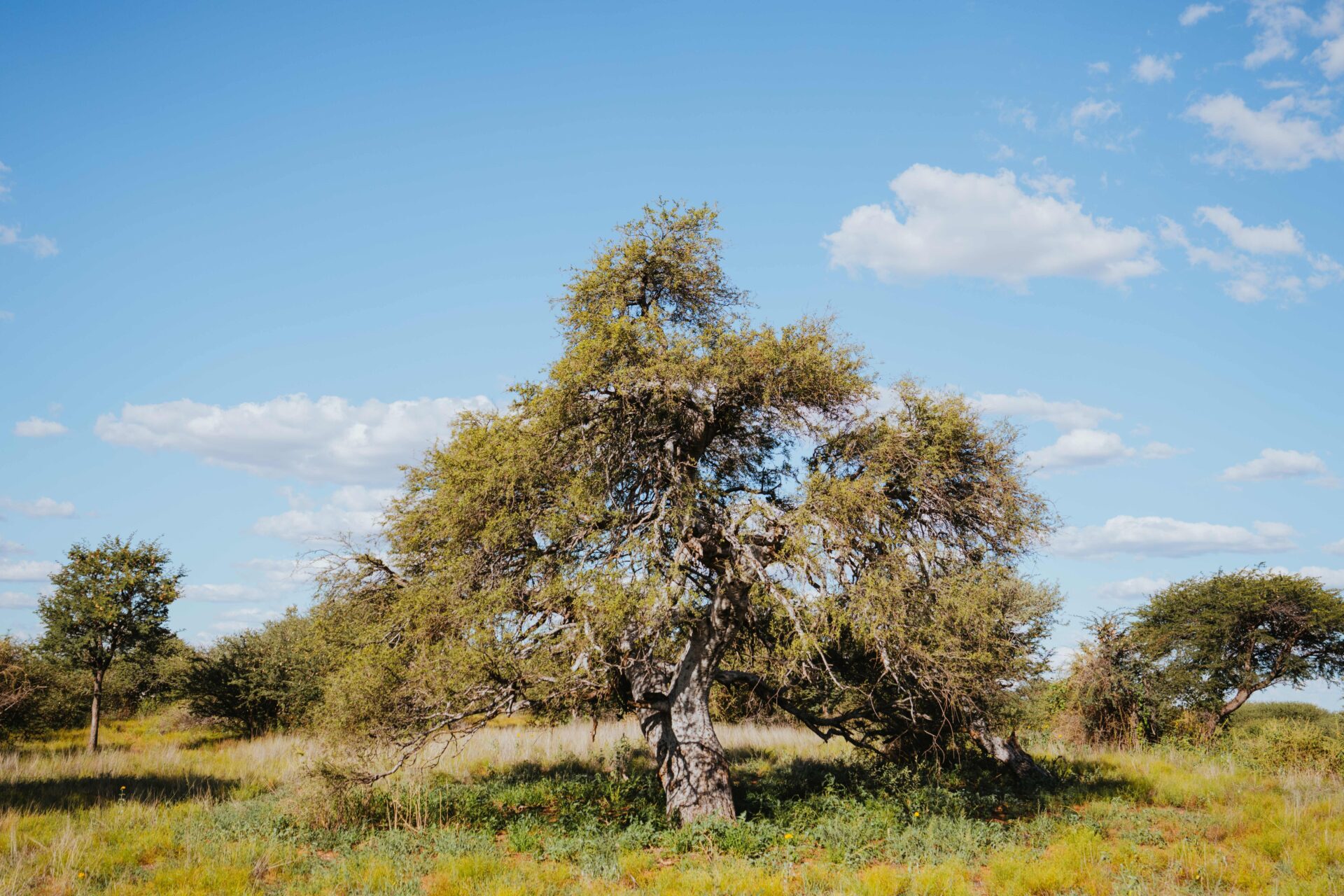
A stellar butterfly season, including a new species recorded
The Kalahari butterfly migration is underway at Tswalu and has, undoubtedly, been a highlight of January. Millions of butterflies are moving north-eastward across the reserve in coordinated waves – a phenomenon that lepidopterist Reinier Terblanche has documented here for over a decade. This isn’t a single event but rather a sequence of distinct pulses rolling through from spring to early winter, with different species dominating at different times.
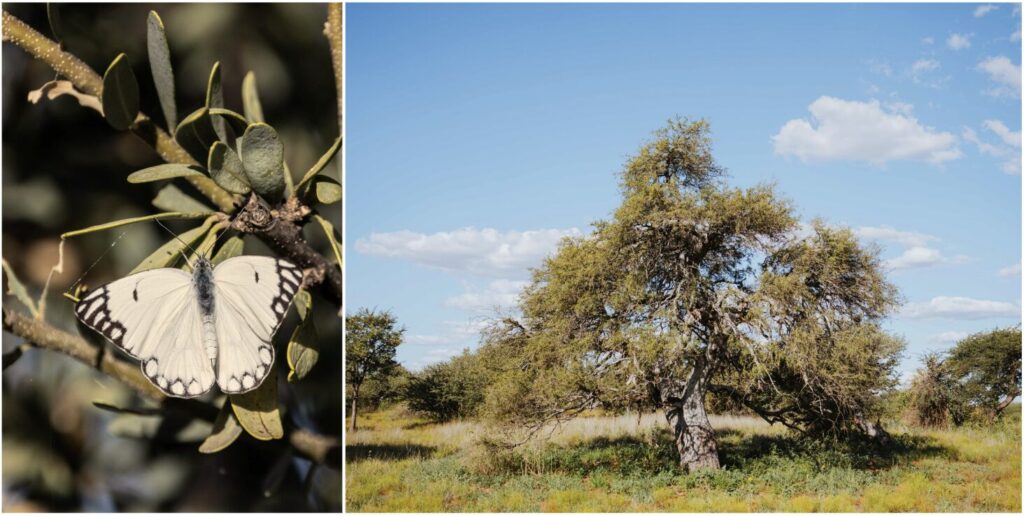
Right now, conditions favour the Brown-veined White (Belenois aurota), the migration’s most abundant species. These butterflies depend entirely on the shepherd’s tree (Boscia albitrunca), that iconic Kalahari species, as their host plant. Caterpillars feed on their leaves before metamorphosing into adults that eventually take flight. The African Migrant (Catopsilia florella), which will dominate migrations in late autumn, relies on eland’s pea (Senna italica), a trailing-stemmed plant that is currently in bloom and is endemic to the southern Kalahari. Tswalu’s importance as a protected source area lies in safeguarding both these keystone host plants. Without them, the migration simply wouldn’t exist – each butterfly species is reliant on its host plant, unable to complete its life cycle without it.
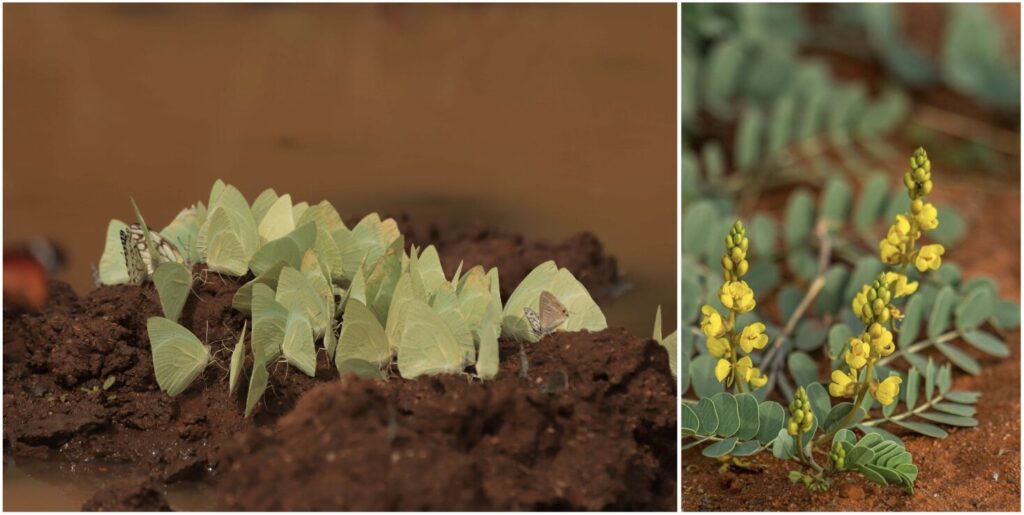
Research at Tswalu has also confirmed return flights among migrating species, proof that these journeys represent true migratory behaviour rather than mere dispersal.
Early summer rain and humidity have kept the landscape green despite limited rainfall this month. The timing of butterfly migrations is notoriously difficult to predict. Rain alone doesn’t guarantee spectacular butterfly years; parasitoid activity can suppress populations even when the weather seems favourable. But when conditions align, the sheer volume of butterflies moving across Tswalu becomes almost overwhelming, forming part of the largest multi-species butterfly migration in southern Africa.
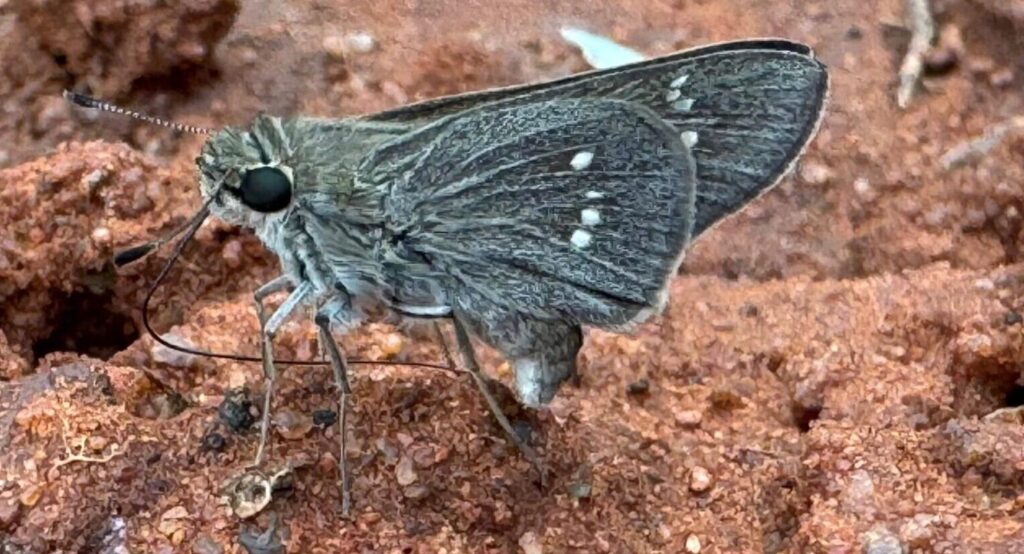
This month brought an unexpected discovery. In early January, a White-branded Swift (Pelopidas thrax) was recorded close to Tswalu’s Dedeben Research Centre. The sighting adds a new species to Tswalu’s butterfly checklist, bringing the total to 84. For context, Great Britain records only 59 butterfly species across its entire landmass. There are very few records of Pelopidas thrax in the Northern Cape, making this find particularly significant.
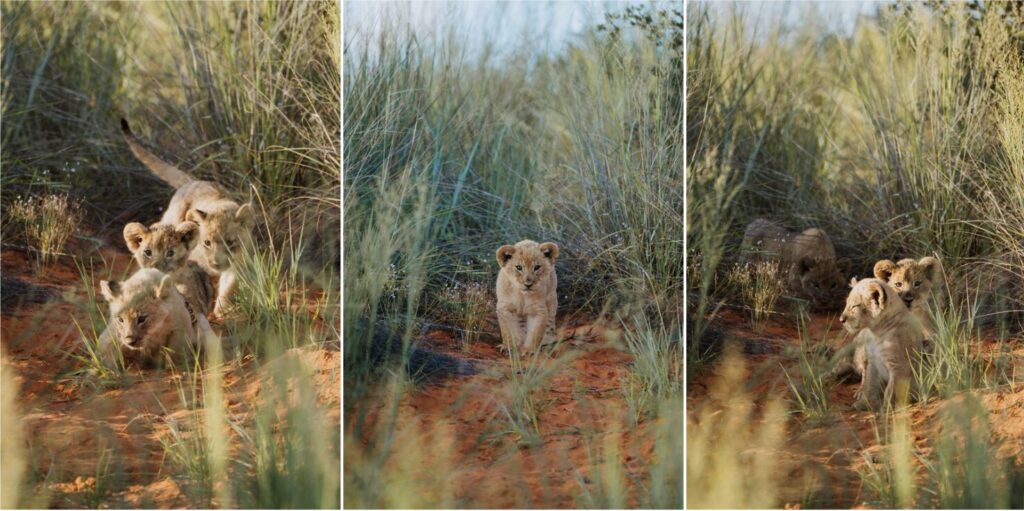
Elsewhere on the reserve, Tswalu’s southern lion pride has welcomed new cubs. Exact numbers remain unconfirmed – the guiding team reports that at least three have been spotted, though the pride hasn’t yet been fully visible. The cubs are still too young for viewing, and the area remains temporarily closed to vehicles. Guests, however, continue to enjoy sightings of the northern pride’s eight cubs when the mothers can be located.
The annual butterfly migration offers moments that are easy to miss unless you’re paying attention: it is a seasonal phenomenon, dependent on variables beyond anyone’s control. January 2026 will go down in the record books as a stellar example of what’s possible when conditions align.
DOWNLOAD THE CONSERVATION JOURNAL HERE
Images: Chris Joubert


