Safari at the height of summer
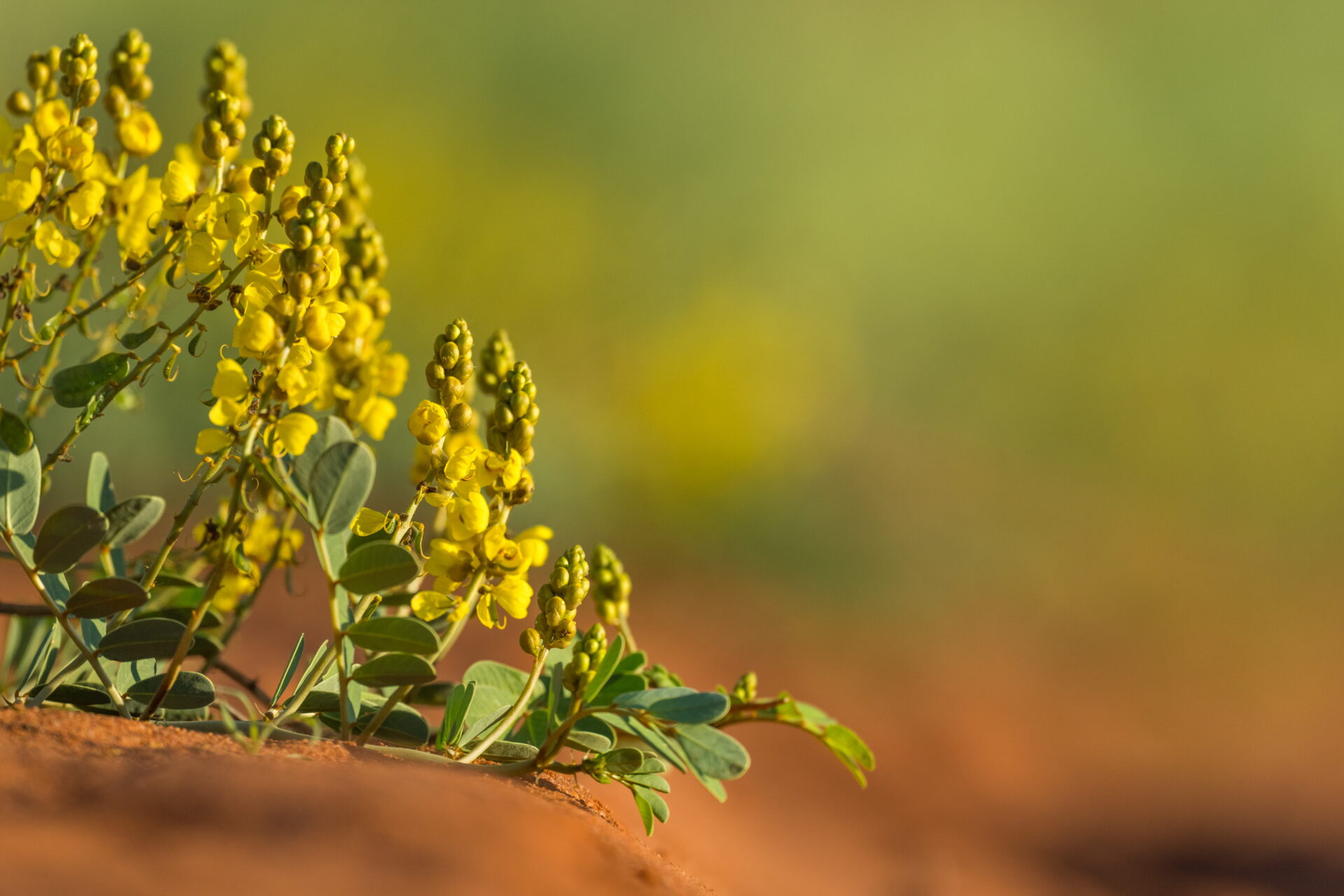
December in the southern Kalahari announces itself with force. Electric storms gather on the horizon, and when they arrive, they transform the landscape in moments. Rain showers sweep across the red dunes in isolated bursts, lowering the heat that builds relentlessly once the sun climbs higher. The reserve responds with remarkable immediacy: grasses flourish, flowering creepers carpet the red earth, and the air carries the scent of sweet-smelling blossoms after dark.
This is summer at Tswalu, a season defined by extremes. The rainy season is always a relative term in the southern Kalahari, typically stretching from November through March, though rainfall patterns remain characteristically unpredictable. When the storms deliver rain, the transformation is miraculous. What falls during these months provides essential insurance against the dry season that will follow.
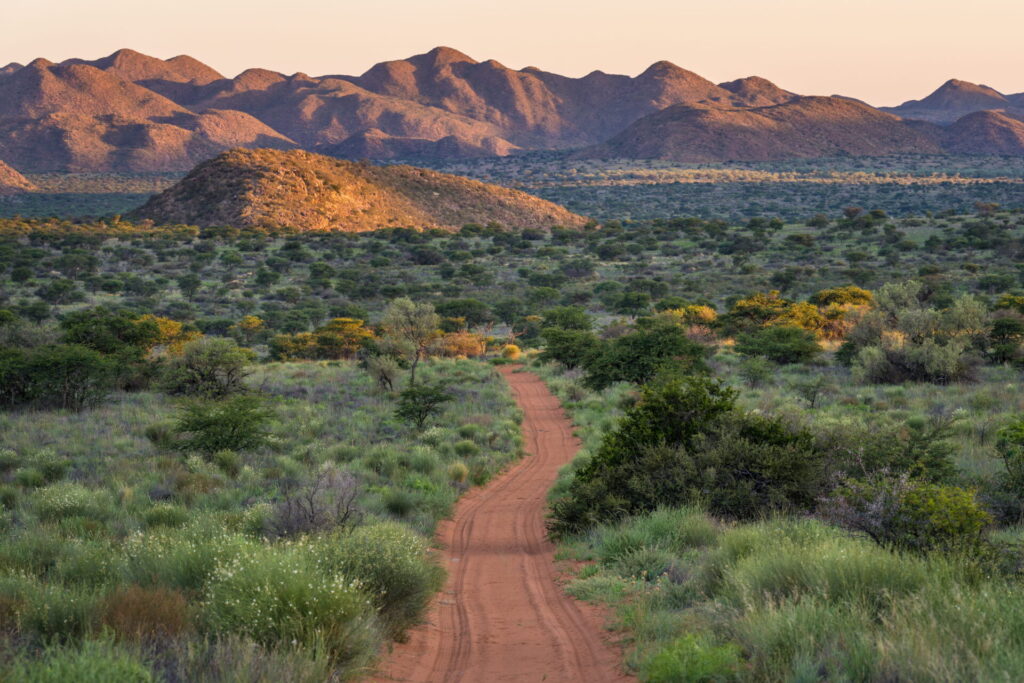
The heat shapes the rhythm of each day, but in ways that enhance rather than limit your experience. Game drives begin before first light, ideally by 5am, capturing the hours when wildlife is most active, and the air still holds the coolness of night. Dawn brings exceptional birding: dozens of species flit between the foliage, including acacia pied barbets, Kalahari scrub robins, fawn-coloured larks, yellow canaries, golden-tailed woodpeckers, and crimson-breasted shrikes. Ant-eating chats work the edges of aardvark and porcupine burrows, probing for ant larvae, while sociable weaver colonies are scenes of high activity. Your private vehicle’s canvas roof protects from the sun during the day, and the open sides ensure you remain connected to the landscape. Waterproof ponchos are always close to hand should you be caught in a sudden, refreshing shower.
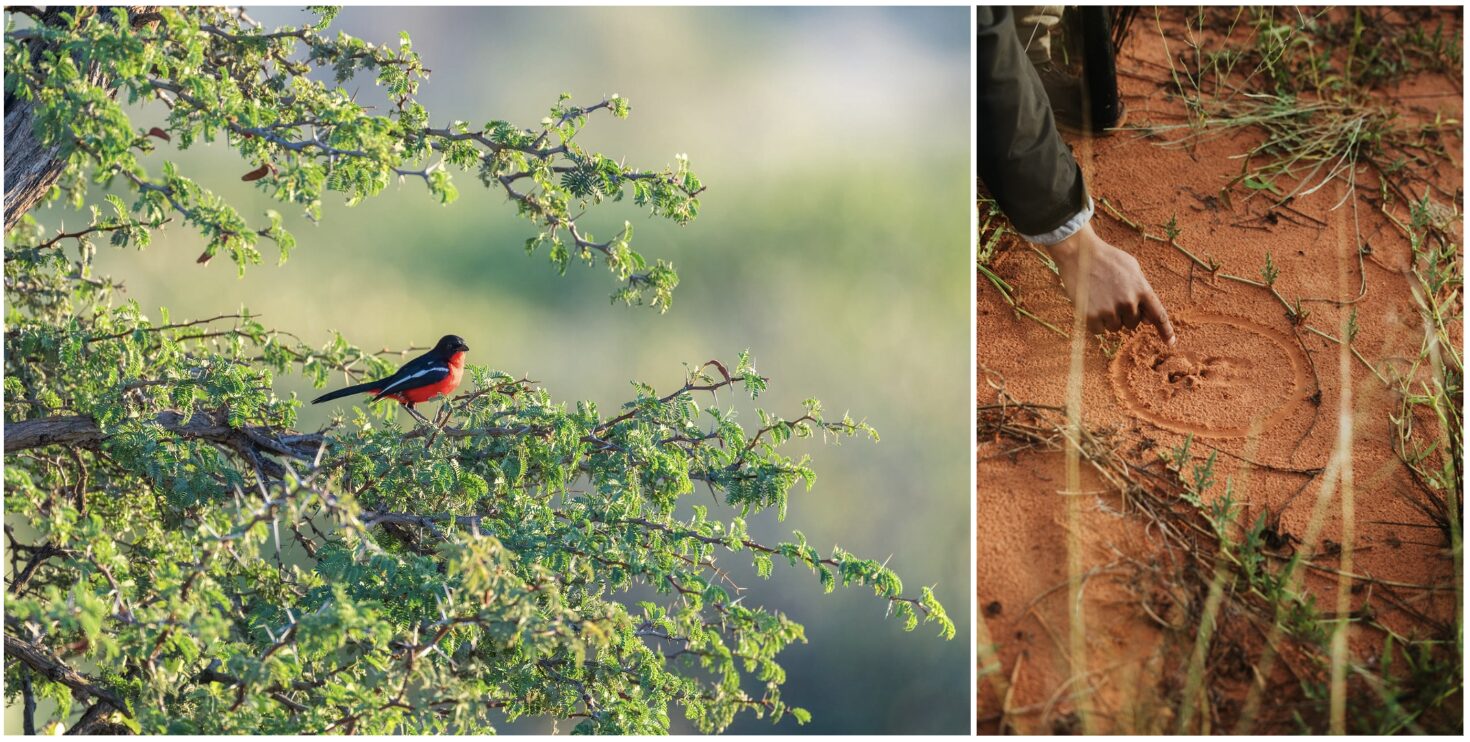
Early morning is also a prime time for immersive bush walks. Before the sun climbs high, you might explore rock art sites in dry river beds, learn to identify medicinal plants with your tracker, or spot birds on foot. Meeting researchers working in the field adds another dimension to your safari: the opportunity to understand ongoing studies across diverse topics, from butterfly migrations to mongoose ecology. With your own private vehicle, guide, and tracker, the day’s structure remains fluid. If a researcher is working nearby, you can detour. If a pan looks promising for sundowners, you can stop and linger. Breakfast picnics with expansive views and dune dinners under the stars also make use of cooler hours, adding variety to dining in camp and Boscia’s heritage-inspired menu.
Most guests choose to return to camp by mid-morning, and the hours that follow offer their own rewards. Poolside lounging, long spa treatments, and lazy afternoons on private day beds create space to absorb the experience in ways that packed winter itineraries rarely allow. Summer at Tswalu is the season to fully inhabit your suite or private home, to read, to nap, to simply be. This unhurried pause is part of the safari itself, a chance to reset before the afternoon brings new possibilities.
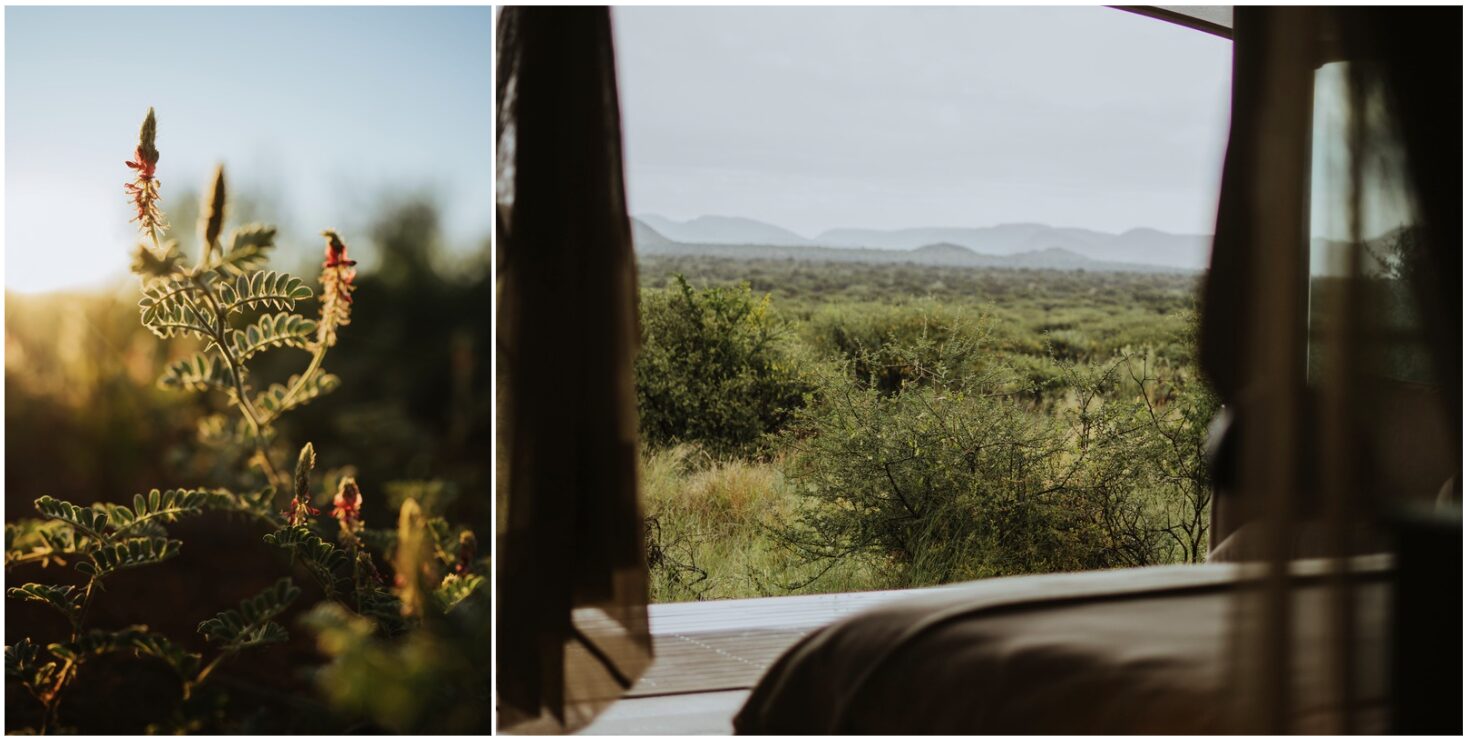
Afternoon drives depart around 5pm, extending well past sunset to 8pm or later. In the early evening, the land cools, barking geckos call for mates, and nocturnal species emerge. Tswalu is renowned for sightings of Africa’s so-called elusive five: aardvark, aardwolf, brown hyena, pangolin, and African wildcat. Evidence of aardvark activity appears everywhere after dark – fresh digging, excavated burrows, and occasionally, a sighting on the road. Black-backed jackals and Cape foxes venture above ground, drawn by the abundance of termites after rain. The possibility of encountering species that remain largely invisible during daylight hours adds anticipation to every outing.
Your guide may cut the engine, leaving nothing but profound silence and the night sky. For city dwellers or those new to Africa, the stillness can be revelatory. The stars appear with startling clarity once darkness settles. These moments of absolute quiet under vast Kalahari skies become as memorable as any wildlife encounter.
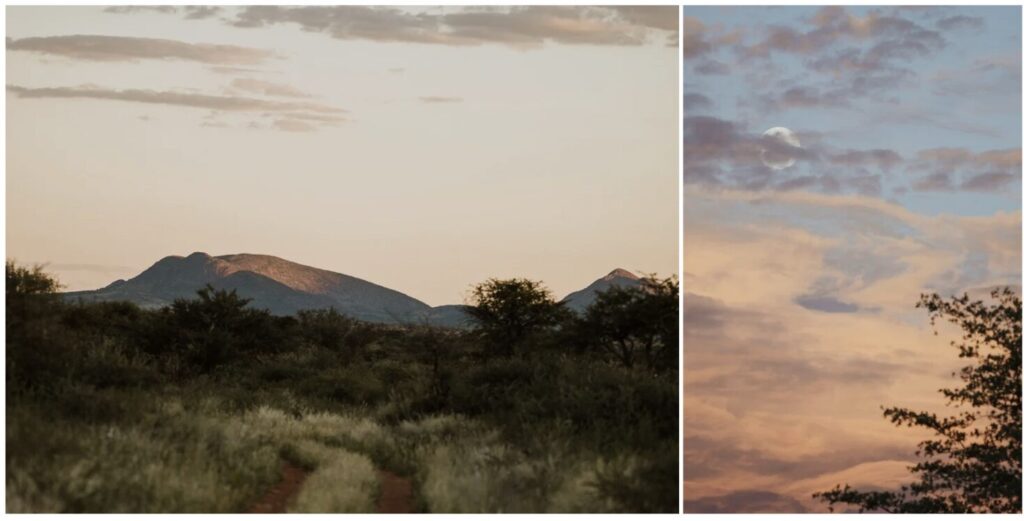
Summer landscapes possess a welcome softness. The vegetation is impossibly green, punctuated by bursts of colour: yellow eland’s bean creepers and carpets of devil’s thorn. For anyone who has only experienced Tswalu in winter, summer is enchanting. The transformation is profound. The reserve becomes a different place entirely, lush and active, with an energy that feels tangible after the first rains. Meerkat pups emerge from their dens. Many antelope species calve early in summer. Migratory birds arrive, making this an exceptional time for birders.
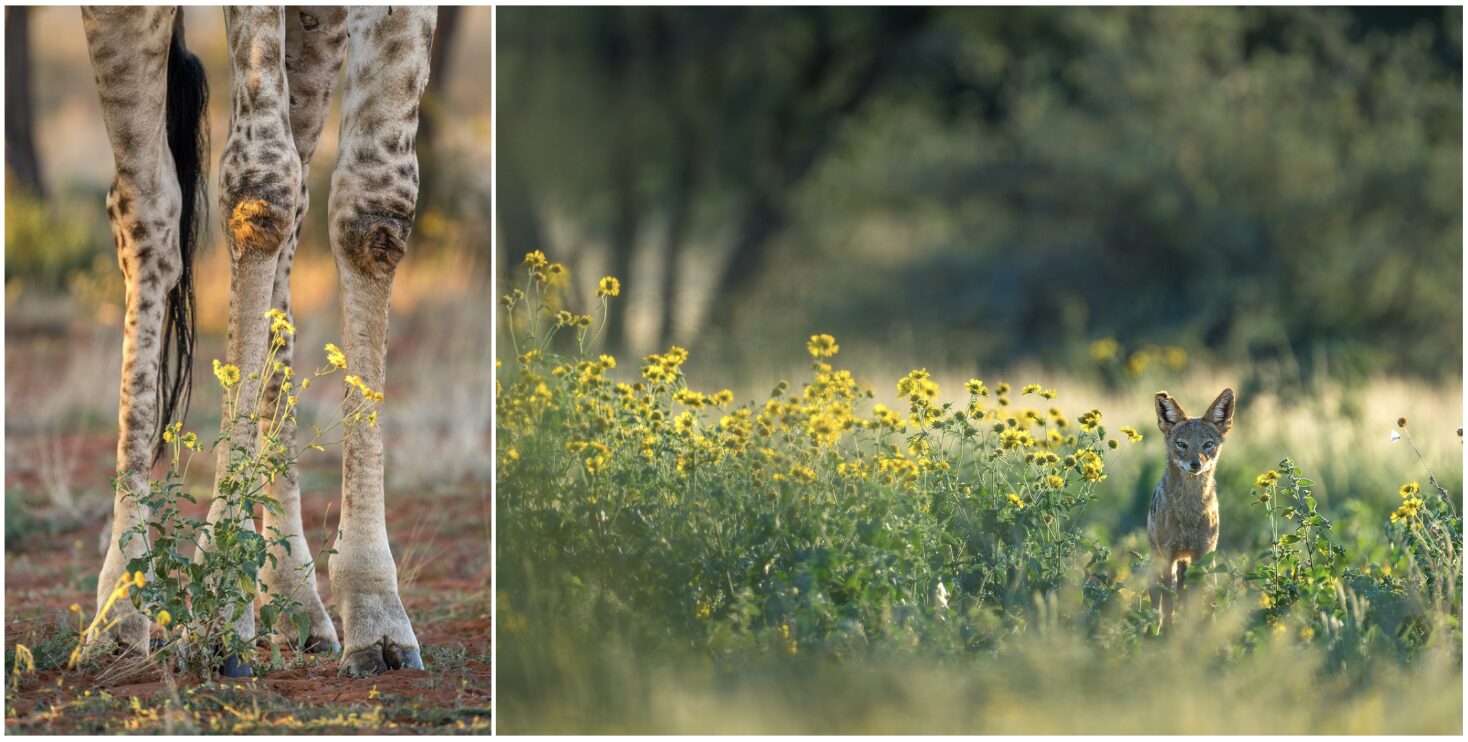
Tswalu in summer hums at a different frequency. Game drives bookend the day at dawn and dusk. The hours in between are yours: spa treatments, coffee on your private terrace, journalling, sketching or reading in the shade – proper rest. Summer here means witnessing the southern Kalahari at its most productive, when rain triggers the ecological processes that sustain this semi-arid landscape, and early mornings offer some of the best wildlife encounters of the year.
Images: Chris Joubert and Marcus Westberg


